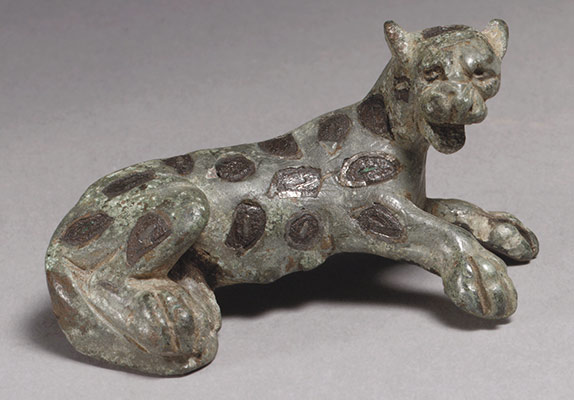
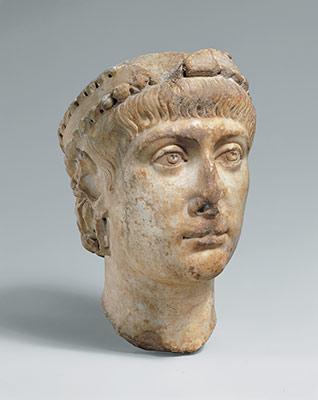
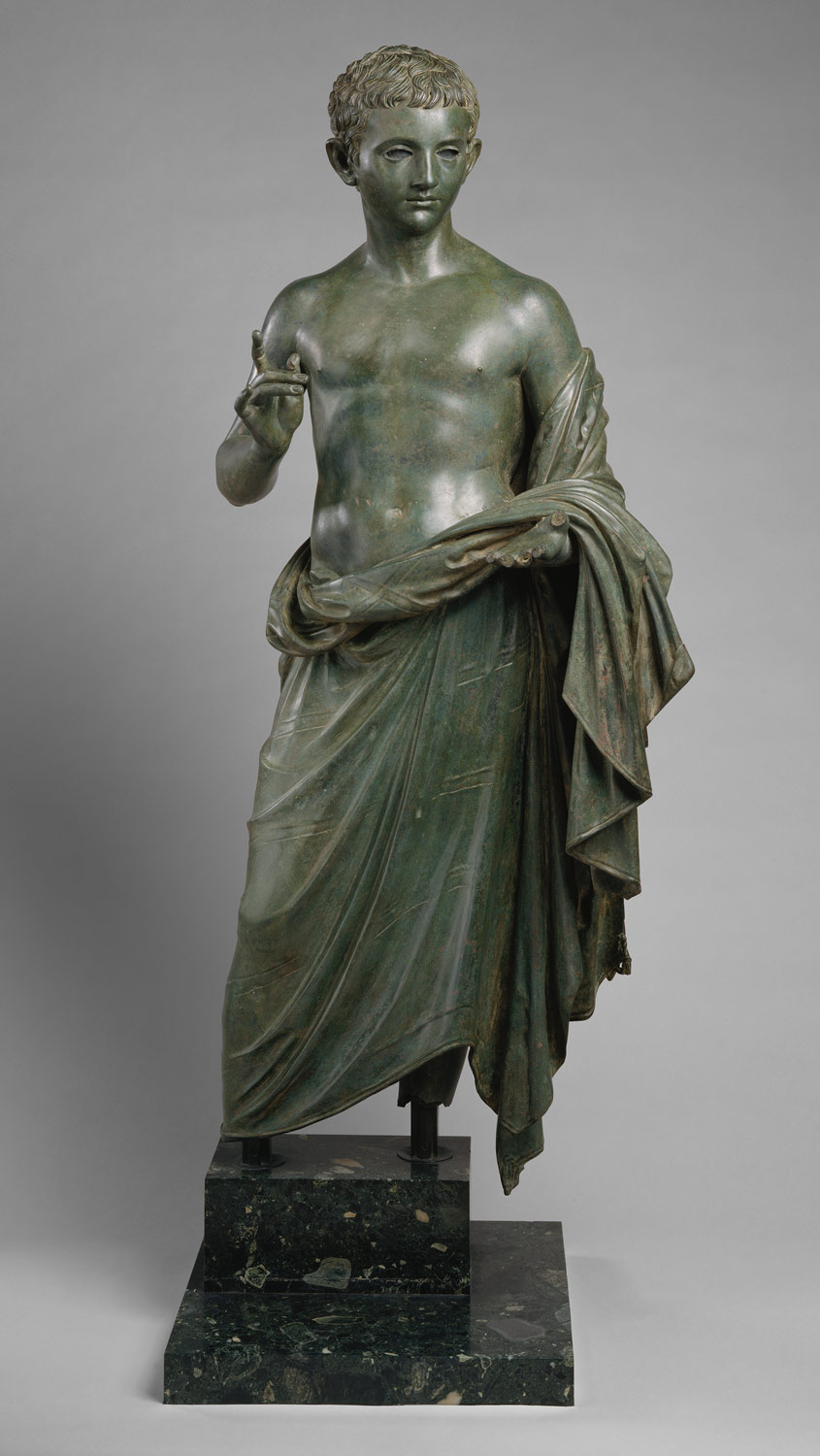
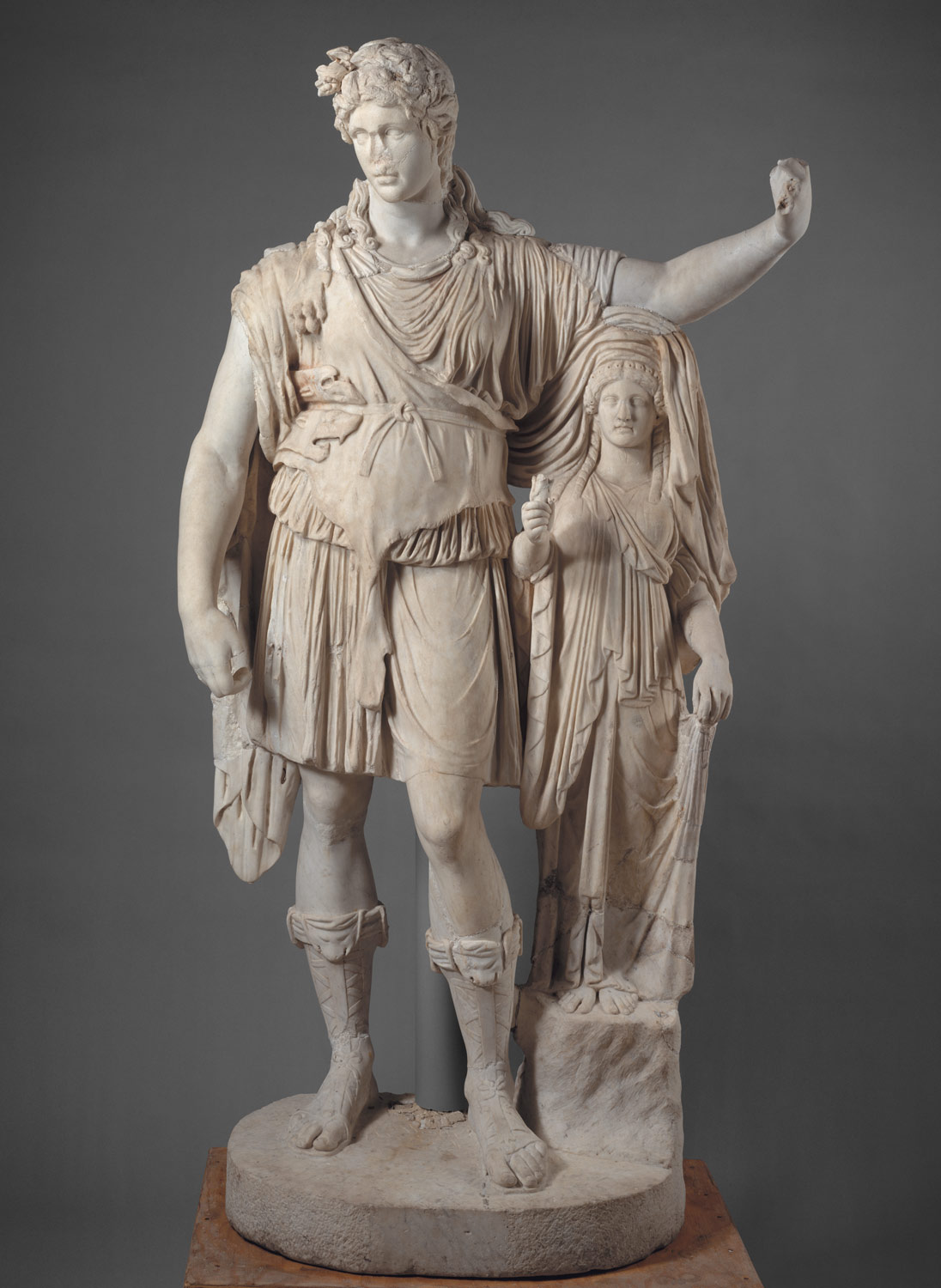
By the beginning of the first millennium A.D., Rome dominates the Balkans. Roman lifestyle, architectural achievements, and propagandistic endeavors influence art and architecture across the peninsula. As Roman dominion weakens, these territories are vulnerable to a series of attacks by the Goths, a Germanic people from southern Scandinavia. Constantinople is founded as the New Rome, and the triumph of Christianity marks the beginning of the Byzantine era in Greece.
Ancient Greece, 1–500 A.D.
-
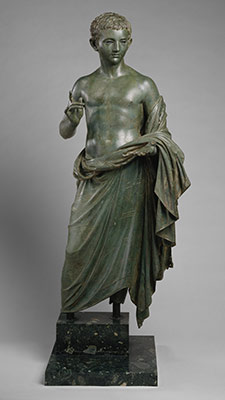
 14.130.1
 -
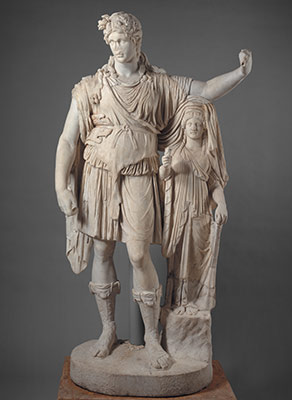
 1990.247
 -
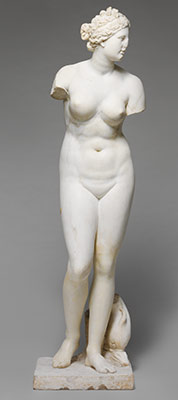
 52.11.5
 -
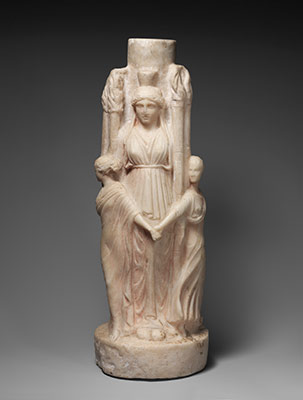
 1987.11.2
 -
 47.100.18
 -
 67.107
Timeline
1 A.D.
125 A.D.
Roman rule, Greek mainland, 146 B.C.–330 A.D.
125 A.D.
250 A.D.
Roman rule, Greek mainland, 146 B.C.–330 A.D.
250 A.D.
375 A.D.
Roman rule, Greek mainland, 146 B.C.–330 A.D.
Byzantine empire, 330–1453 A.D.
375 A.D.
500 A.D.
Byzantine empire, 330–1453 A.D.
Overview
Key Events
-
Before 67 A.D.
The apostle Paul preaches in several major cities, including Thessaloniki, Corinth, and Antioch. It is at this time that disciples of Jesus are first referred to as Christians.
-
85–86 A.D.
The Dacians, an agricultural people in the loop of the lower Danube, invade Moesia and inflict disastrous defeat on the Romans. In 88 A.D., a victory at Tapae prepares the way for Trajan’s later wars and annexation of Dacia. The Roman emperor Domitian sends engineers to Dacia as part of the peace treaty with the Dacian king Decebalus.
-
ca. 98–102 A.D.
The Library of Pantainos is constructed in the Athenian Agora.
-
101–106 A.D.
The Roman emperor Trajan conquers the Dacians during the First and Second Dacian Wars. His campaigns are memorialized on the spiral frieze of Trajan’s Column in Rome. The column and forum are built with funds largely from the royal treasury of the Dacians.
-
117 A.D.
The Roman emperor Hadrian (r. 117–138 A.D.) completes the Temple of Olympian Zeus, the principal monument in southeast Athens. The emperor also erects a gymnasium and a number of bathing establishments in the vicinity.
-
ca. 170–180 A.D.
Pausanias, a Greek traveler and geographer, writes his Description of Greece, sketching the history and topography of important cities and their surroundings. His accuracy is confirmed by archaeological finds, and his descriptions remain a valuable resource to this day.
-
257–263 A.D.
The Goths raid Greece and Asia Minor. In 267 A.D., they sack Athens, Corinth, Sparta, and Argos.
-
280 A.D.
In response to raids by the Goths, Athens constructs a major fortification wall, the first since the time of Perikles.
-
293 A.D.
Diocletian, a Dalmatian by birth, reorganizes the Roman empire and establishes his famous tetrarchy as a response to difficulties in government. Under his rule, civil and military functions are separated. He makes a determined effort to stabilize the currency and introduce a new fiscal system.
-
300–305 A.D.
Diocletian builds his palace near modern-day Split in Croatia.
-
330 A.D.
Constantinople is founded as the “New Rome.”
-
378 A.D.
The Visigoths defeat the Eastern Roman emperor Valens near Adrianople. The battle is seen as a watershed in the decline of the Roman army and its ability to stem the barbarian invasions.
-
391 A.D.
The emperor Theodosius orders the closing of pagan temples. The Olympic games cease at this time or slightly later in 426 A.D., when the Temple of Zeus at Olympia is destroyed by fire.
Citation
“Ancient Greece, 1–500 A.D.” In Heilbrunn Timeline of Art History. New York: The Metropolitan Museum of Art, 2000–. http://www.metmuseum.org/toah/ht/?period=05®ion=eusb (October 2000)
Related
Map

Primary Chronology
Secondary Chronology
Lists of Rulers
See also
CLOSE


Heilbrunn Timeline of Art History