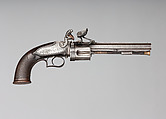
프랑스 루이 13세의 화승총
Artwork Details
- 제목: 프랑스 루이 13세의 화승총
- 아티스트: 피에르 르 부르주아 프랑스, 1627년 사망
- 연대: 1620년경
- 재료: 철, 동, 은, 금, 나무, 자개
- 크기: 길이 139.7cm, 구경 15mm
- 크레디트 라인: 로저스 및 해리스 브리스베인 딕 기금, 1972
- 작품 번호: 1972.223
- Curatorial Department: Arms and Armor
Audio
4434. Flintlock Gun
NARRATOR: Look for the gun in this case with the scrolled butt, second from the top. Curator Stuart Pyhrr.
STUART PYHRR: This gun, made for Louis XIII, King of France, about 1620, is not only a technical marvel but a work of art. The fruitwood stock is gracefully carved at its butt, not with the usual square or angular end, but, rather, with a delicate scroll outlined by a copper leaf and buttons of mother-of-pearl. It glitters in the light. The decoration of the stock in silver and brass wire, engraved silver sheet and mother of pearl, includes the crown monogram, “L,” for Louis XIII, who, as young monarch, was not only an avid hunter but also a gun collector and amateur gunsmith. He was known to contemporaries as "Louis l'Arquebusier"—“Louis the Gun-Maker.”
NARRATOR: This beautifully crafted weapon was also one of the earliest firearms to use the flintlock mechanism. The flintlock was invented in France about this time—around 1620—and became the standard firing mechanism on most guns up until the nineteenth century. Press PLAY to hear more about how the flintlock mechanism works.
More Artwork
Press the down key to skip to the last item.
Related Content

Research Resources
The Met provides unparalleled resources for research and welcomes an international community of students and scholars. The Met's Open Access API is where creators and researchers can connect to the The Met collection. Open Access data and public domain images are available for unrestricted commercial and noncommercial use without permission or fee.
To request images under copyright and other restrictions, please use this Image Request form.
Feedback
We continue to research and examine historical and cultural context for objects in The Met collection. If you have comments or questions about this object record, please contact us using the form below. The Museum looks forward to receiving your comments.