The Renaissance Portrait: From Donatello to Bellini
147 d71e0eda-b10d-4524-9704-62a170349d21
110001340
Portrait of a Woman with a Man at a Casement

Portrait of a Woman with a Man at a Casement

Fra Filippo Lippi (Italian, Florence ca. 1406–1469 Spoleto)

Date:
ca. 1440
Medium:
Tempera on wood
Dimensions:
25 1/4 x 16 1/2 in. (64.1 x 41.9 cm)
Classification:
Paintings
Credit Line:
Marquand Collection, Gift of Henry G. Marquand, 1889
Accession Number:
89.15.19

Description

As the earliest surviving Italian double portrait in a domestic setting, this painting is doubly groundbreaking and innovative. The two figures have been plausibly identified as Lorenzo di Ranieri Scolari (1407–1478) and Angiola di Bernardo Sapiti, who were married in 1436. The painting is usually dated around 1440 and may have commemorated their wedding or the birth of a child. The careful attention to the woman's dress and jewels, and the topographical depiction of the buildings and gardens in the background, seem almost to document the Scolari family possessions.

120011927
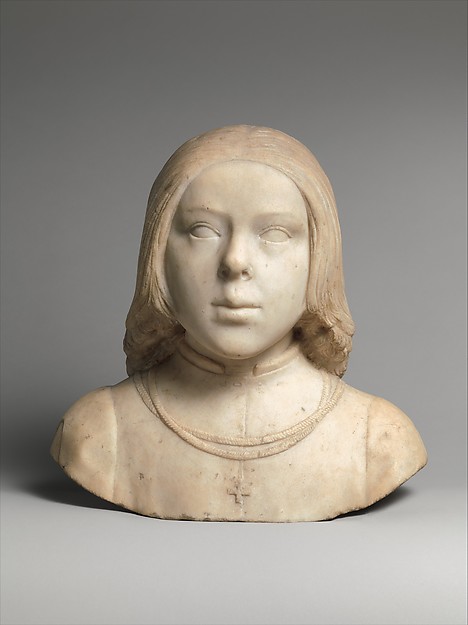
A Boy

A Boy

Attributed to Gian Cristoforo Romano (1465–1512)

Date:
late 15th–early 16th century
Culture:
Italian (Rome)
Medium:
Marble
Dimensions:
Overall (confirmed, wt. with socle): 12 3/4 x 12 5/16 x 8 3/8 in., 42lb. (32.4 x 31.2 x 21.3 cm, 19.0511kg)
Classification:
Sculpture
Credit Line:
The Friedsam Collection, Bequest of Michael Friedsam, 1931
Accession Number:
32.100.154
150000075
A Woman, Possibly a Nun of San Secondo; (verso) Scene in Grisaille

A Woman, Possibly a Nun of San Secondo; (verso) Scene in Grisaille

Jacometto (Jacometto Veneziano) (Italian, active Venice by ca. 1472–died before 1498)

Date:
last quarter 15th century
Culture:
Italian, Venice
Medium:
Oil on wood; (verso: oil and gold on wood)
Dimensions:
Overall 4 x 2 7/8 in. (10.2 x 7.3 cm); recto and verso, painted surface 3 3/4 x 2 1/2 in. (9.5 x 6.4 cm)
Classification:
Paintings
Credit Line:
Robert Lehman Collection, 1975
Accession Number:
1975.1.85

Description

Little is known about the mysterious Venetian artist Jacometto (Jacometto Veneziano). The portraits in the Robert Lehman Collection (1975.1.85 and 1975.1.86), his most important surviving paintings, are most likely the ones mentioned in a sixteenth-century guidebook citing the artistic masterpieces of Venice, where they are described admiringly as "a most perfect work." Based on this early reference, the sitters have traditionally been identified as Alvise Contarini and a nun of San Secondo, though the secular garb of the female sitter makes the latter identification unlikely. Both portraits are striking for their meticulous detail, highly refined technique, and luminous, atmospheric landscape backgrounds.

150000076
Alvise Contarini(?); (verso) A Tethered Hart

Alvise Contarini(?); (verso) A Tethered Hart

Jacometto (Jacometto Veneziano) (Italian, active Venice by ca. 1472–died before 1498)

Date:
last quarter 15th century
Culture:
Italian, Venice
Medium:
Oil on wood
Dimensions:
Overall 4 5/8 x 3 3/8 in. ; recto, painted surface 4 1/8 x 3 1/8 in.; verso, painted surface 4 3/8 x 3 1/8 in.
Classification:
Paintings
Credit Line:
Robert Lehman Collection, 1975
Accession Number:
1975.1.86

Description

Little is known about the mysterious Venetian artist Jacometto (Jacometto Veneziano). The portraits in the Robert Lehman Collection (1975.1.85 and 1975.1.86), his most important surviving paintings, are most likely the ones mentioned in a sixteenth-century guidebook citing the artistic masterpieces of Venice, where they are described admiringly as "a most perfect work." Based on this early reference, the sitters have traditionally been identified as Alvise Contarini and a nun of San Secondo, though the secular garb of the female sitter makes the latter identification unlikely. Both portraits are striking for their meticulous detail, highly refined technique, and luminous, atmospheric landscape backgrounds.

120024087
Giovanni Gioviano Pontano (1426-1503)

Giovanni Gioviano Pontano (1426-1503)

Adriano Fiorentino (Adriano di Giovanni de' Maestri) (Italian, Florence (?) born ca. 1450–60, died 1499 Florence)

Date:
ca. 1490
Culture:
Italian (Naples)
Medium:
Marble
Dimensions:
Overall (wt. confirmed): 19 7/8 x 13 1/8 x 4 1/2 in., 73lb. (50.5 x 33.3 x 11.4 cm, 33.1126kg)
Classification:
Sculpture
Credit Line:
Purchase, Gift of J. Pierpont Morgan, by exchange, 1991
Accession Number:
1991.21
110000773
Federigo Gonzaga (1500–1540)

Federigo Gonzaga (1500–1540)

Francesco Francia (Italian, Bologna ca. 1447–1517 Bologna)

Date:
1510
Medium:
Tempera on wood, transferred from wood to canvas and then again to wood
Dimensions:
Overall 18 7/8 x 14 in. (47.9 x 35.6 cm); painted surface 17 3/4 x 13 1/2 in. (45.1 x 34.3 cm)
Classification:
Paintings
Credit Line:
Bequest of Benjamin Altman, 1913
Accession Number:
14.40.638

Description

In July 1510 the ten-year-old Federigo Gonzaga was sent from Mantua to Rome as a hostage. On his way to Rome he stopped in Bologna, where Francia astounded everyone by painting and delivering his portrait in twelve days. The picture was subsequently taken to Rome for the admiration of the papal court and was only reluctantly returned to Isabella d'Este, Federigo's mother. The fine execution of this famous portrait is typical of Francia's best work.

The exhibition is made possible by the William Randolph Hearst Foundation, the Diane W. and James E. Burke Fund, the Gail and Parker Gilbert Fund, and The Horace W. Goldsmith Foundation.

The exhibition was organized by Staatliche Museen zu Berlin, Gemäldegalerie
and The Metropolitan Museum of Art, New York.

It is supported by an indemnity from the Federal Council on the Arts and the Humanities.

The exhibition catalogue is made possible by the Samuel I. Newhouse Foundation, Inc.
The Renaissance Portrait from Donatello to Bellini

December 21, 2011–March 18, 2012

Accompanied by a catalogue and an Audio Guide

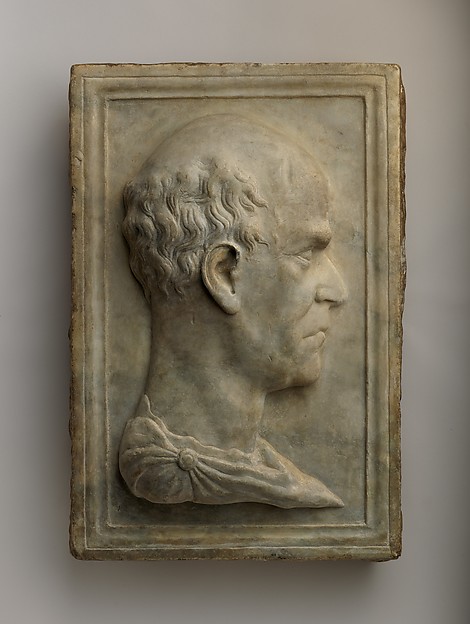
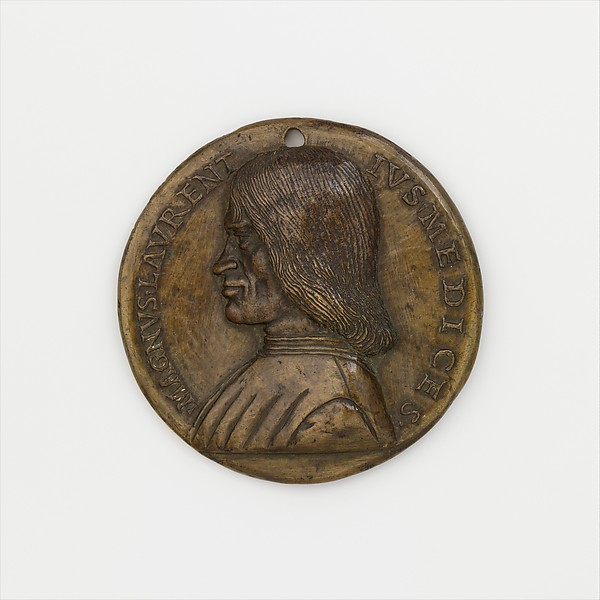
It has been said that the Renaissance witnessed the rediscovery of the individual. In keeping with this notion, early Renaissance Italy also hosted the first great age of portraiture in Europe. Portraiture assumed a new importance, whether it was to record the features of a family member for future generations, celebrate a prince or warrior, extol the beauty of a woman, or make possible the exchange of a likeness among friends. This exhibition will bring together approximately 160 works—by artists including Donatello, Filippo Lippi, Botticelli, Verrocchio, Ghirlandaio, Pisanello, Mantegna, Giovanni Bellini, and Antonello da Messina, and in media ranging from painting and manuscript illumination to marble sculpture and bronze medals, testifying to the new vogue for and uses of portraiture in fifteenth-century Italy.

During the early Renaissance, artists working in Florence, Venice, and the courts of Italy created magnificent portrayals of the people around them—from heads of state and church to patrons, scholars, poets, and artists—concentrating for the first time on producing recognizable likenesses and expressions of personality. The rapid development of portraiture was linked closely to Renaissance society and politics, ideals of the individual, and concepts of beauty. The object may have been to commemorate a significant event—a marriage, death, the accession to a position of power—or it may have been to record the features of an esteemed member of the family for future generations.

Featuring many rare international loans, this exhibition will present an unprecedented survey of the period and provide new research and insight into the early history of portraiture. It will be divided into three sections and will span a period of eight decades. Beginning in Florence, where independent portraits first appeared in abundance, it moves to the courts of Ferrara, Mantua, Bologna, Milan, Urbino, Naples and papal Rome, and ends in Venice, where a tradition of portraiture asserted itself surprisingly late in the century.

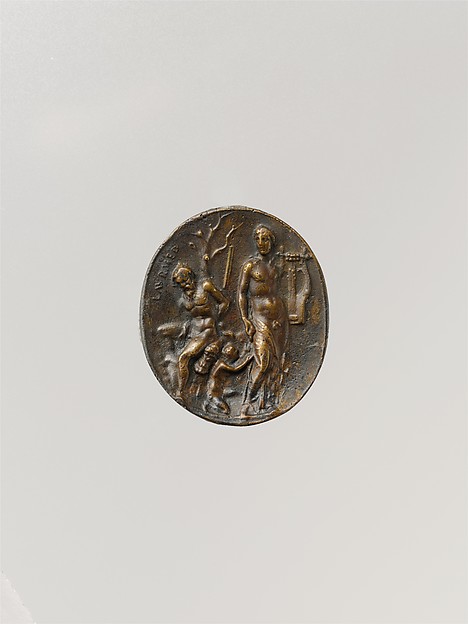
In Florence, the most striking innovations occurred first in sculpture and were then taken up in painting. In the courts, thanks in large measure to the genius of Pisanello, the medal became the preferred means of recording a likeness. The medals, which were durable, could be produced in multiple casts, and were easily exchanged among the social elite. In Venice the painted portrait held sway, thanks to the achievements of Antonello da Messina and Giovanni Bellini, whose portraits resolutely abandoned the dominant Italian convention for the profile to present the sitter turned three-quarters, his or her distant gaze and delicately modeled features expressing hints of an interior life.

As Leon Battista Alberti declared in his treatise on painting, composed in 1435: "Painting possesses a truly divine power in that not only does it make the absent present (as they say of friendship), but it also represents the dead to the living many centuries later, so that they are recognized by spectators with pleasure and deep admiration for the artist."

Related Link: Münzkabinett's Online Catalogue (Staatliche Museen zu Berlin)

110001340

Close