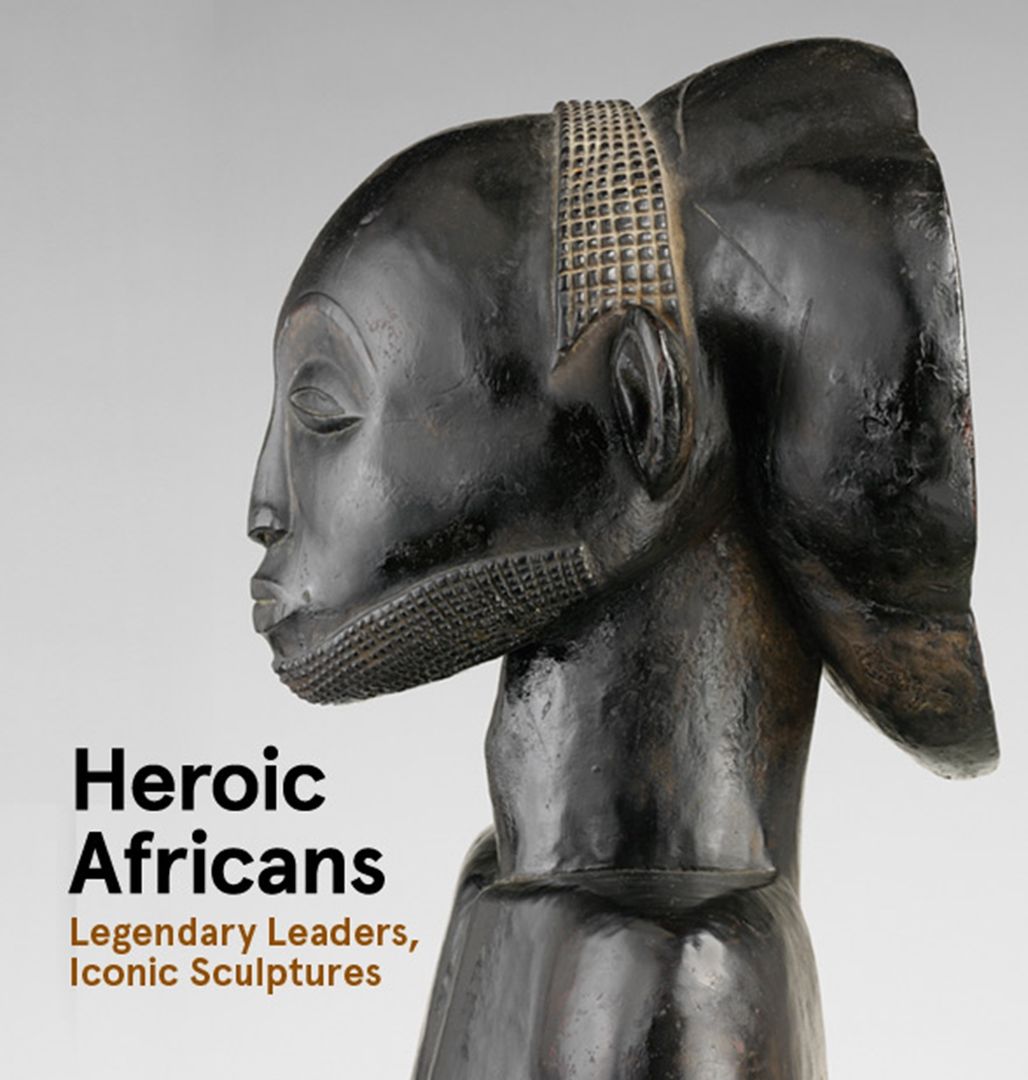
Heroic Africans: Legendary Leaders, Iconic Sculptures
At The Met Fifth Avenue
September 21, 2011–January 29, 2012
This major international loan exhibition challenges conventional perceptions of African art. Bringing together more than one hundred masterpieces drawn from collections in Germany, Switzerland, Belgium, the United Kingdom, Portugal, France, and the United States, it considers eight landmark sculptural traditions from West and Central Africa created between the twelfth and early twentieth centuries in terms of the individual subjects who lie at the origins of the representations. Analysis of each of these considers the historical circumstances and cultural values that inform the artistic landmarks presented.
The works featured are among the only tangible links that survive, relating to generations of leaders that shaped Africa's past before colonialism, among the Akan of Ghana, ancient Ife civilization and the Kingdom of Benin of Nigeria, Bangwa and Kom chiefdoms of the Cameroon Grassfields, the Chokwe of Angola and Zambia, and the Luluwa, Hemba, and Kuba of the Democratic Republic of the Congo. Harnessing materials ranging from humble clay, ubiquitous wood, precious ivory, and costly metal alloys, sculptors from these regions captured evocative, idealized, and enduring likenesses of their individual patrons whose identities were otherwise recorded in ephemeral oral traditions.
The exhibition opens by posing the question: Who are the individuals that the most gifted artists of their respective times and cultures depicted for posterity? Over the centuries across sub-Saharan Africa, artists memorialized for posterity eminent individuals of their societies in an astonishingly diverse repertory of regional sculptural idioms, both naturalistic and abstract, that commemorate their subjects through customized aesthetic formulations. The original patrons of such depictions intended for them to act as concrete points of reference to specific elite members of a given community. For over a century, however, isolation of those creations from the sites, oral traditions, and sociocultural contexts in which they were conceived has led them to be seen as timeless abstractions of generic archetypes. On a purely formal level it is not self-evident that these works were produced in honor of admired individuals. Instead, cultural context is the key to our appreciation of the significance of such representations and ability to connect them to their historical subjects. While information about those figures has been touched upon in the academic literature of African studies, such a body of work has never before been assembled in an exhibition. Heroic Africans presents an unparalleled opportunity to bring to life oral history in visual terms and to put a face on Africa's pre-colonial history for the widest possible audience.
An in-depth look at one of Central Africa's most dazzling sculptural genres unfamiliar to American audiences is a highlight of the exhibition. During the nineteenth century, Hemba masters in the northeastern Democratic Republic of the Congo paid tribute to their leaders through these free-standing wood sculptures, impressive for their scale and elegance. An unprecedented assemblage of twenty-two superb works from this sublime tradition is gathered together for the first time and offers viewers an opportunity to examine the subtle distinctions that may be discerned among masterpieces that rank among the most impressive artistic achievements from sub-Saharan Africa.
In addition to key works central to the Metropolitan's own collection, outstanding loans have been contributed by the Kimbell Art Museum in Fort Worth; Seattle Art Museum; Cleveland Museum of Art; Minneapolis Museum of Art; Smithsonian Institution, National Museum of African Art; Brooklyn Museum of Art; British Museum; Welkulturen Museum, Frankfurt; Volkerkunde Museum, Berlin; Dapper Museum and Quai Branly, Paris; Museum aan de Stroom [MAS], Antwerp, and the Afrika Museum in Tervuren, Belgium; and Museu Nacional de Arqueologia and Museu Etnográfico-Sociedade de Geografia, Lisbon.
The exhibition is made possible in part by The Andrew W. Mellon Foundation, The Ceil & Michael E. Pulitzer Foundation, Inc., and the National Endowment for the Arts.
The exhibition catalogue is made possible by The MCS Endowment Fund.
Following the presentation at the Metropolitan, the exhibition will travel to the Museum Rietberg in Zurich, where it will be on view February 26 through June 3, 2012.
Life is short, art endures.
—Hippocrates (460–400 B.C.E.), Aphorisms, Sect. I, I
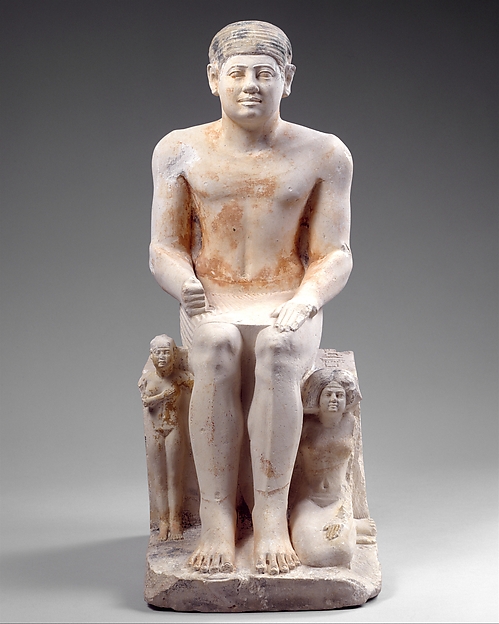
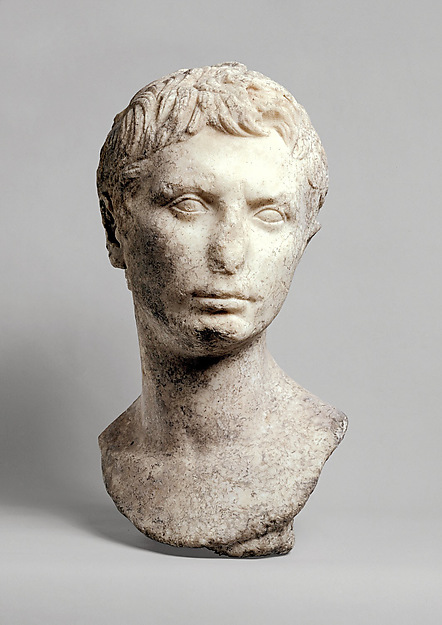
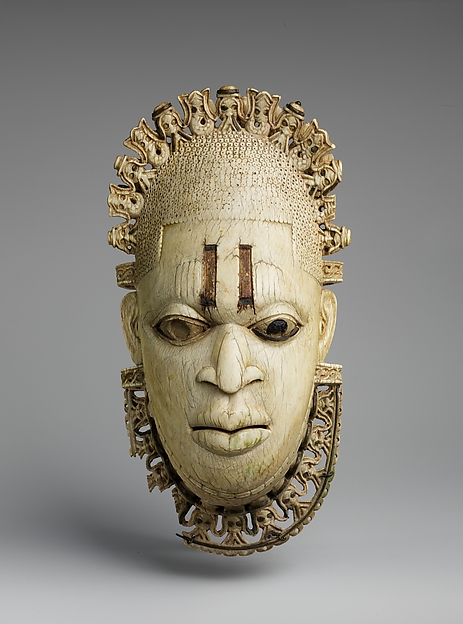
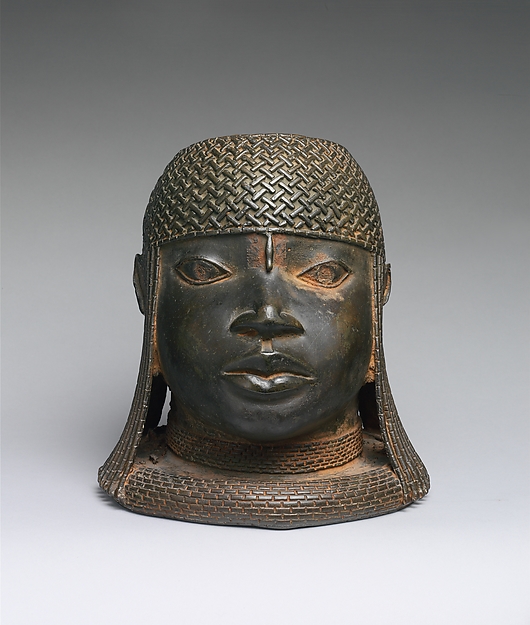
Artists throughout history have risen to the challenge of portraying notable persons through sculptural creations that would outlive their ephemeral subjects. Although the fame of an individual may be lost through the vicissitudes of history, such artistic tributes were conceived as enduring monuments to his or her life. The first section of Heroic Africans notes that this was the impetus for the creation of a selection of works from the Metropolitan's permanent collection. Those that commemorate several generations of the Kingdom of Benin's leadership—including Idia, mother to Oba Esigie (r. early 16th century), Oba Akenzua I (r. ca. 1715–35), and the Ezomo Ehenua—are positioned in dialogue with comparative ones from ancient Egypt and Rome to consider how artists from different traditions developed their own visual idioms for capturing lasting impressions of remarkable individuals. Faced with the loss of a revered life, a commemorative work may in some measure redress the enormity of the resulting absence with a tangible and lasting presence. The very physicality of sculptural representations ideally allows them to serve not merely as evocations of a given human subject but as surrogates.
To die is to become deified; no one venerates a living person.
—Yoruba proverb
A second section of the exhibition considers a series of ancient terracotta sculptures created at Ife that are striking for their naturalism. The site of Ile-Ife in present-day southwestern Nigeria was occupied as early as 350 B.C.E. Between 500 and 900 C.E., the city was home to ironworking agriculturalists, and by the eleventh century it had become a major metropolis defined by an orderly arrangement of city walls, streets, stone monuments, shrines, and planned building complexes with multiple interior courtyards, elaborately decorated stone pavements, and altars. In that setting generations of artists produced works of terracotta, cast metal, and stone. The refined modeling of these works attests to their makers' mastery of highly detailed representations. The original impetus for Ife's extensive fired clay corpus remains an enigma. Formally these suggest subtly calibrated efforts to capture nuanced qualities of a spectrum of carefully studied subjects that are ultimately tempered by a transcendent idealization.
When an elder dies, it is as if a whole library had burned down.
—West African proverb
As early as the seventeenth century, Akan artists in centers across present-day southern Ghana and southeastern Côte d’Ivoire, an area once known as the Gold Coast, modeled commemorative images of senior chiefs, priests, queen mothers, and other notables in ordinary clay. Their creations paid tribute to their leaders' roles as vessels for the collective experience, wisdom, and memory of their people. Akan authors of this commemorative genre developed distinctive interpretations of the hollowed terracotta sculptures, ranging from the schematic two-dimensional depictions favored by Kwahu artists to the highly detailed cylindrical works embraced by their Aowin counterparts. These approaches universally emphasize the passage of the head gazing heavenward. The artists' stated ambition was to achieve an incisive degree of accuracy, thus directly relating a work to its subject.
Here is the stone where your fathers' family have sat before they were called to the throne, and it is on this very stone that you sit to-day[;] you are therefore king. May Yoruban [God] bless you. . . . May Yoruban grant you many children and may your war-spear be mighty and your work strong. May Yoruban give you much and good advice increase your wealth; . . . Yoruban accepts you as king of the Bamum.
—Njoya, as cited in M. D. W Jeffreys
Within the Grassfields region of northwestern Cameroon, the Bamileke and Bangwa chiefdoms in the west and the Kom kingdom of the northwest developed distinctive sculptural genres that powerfully evoked past leaders. Among the Bangwa, freestanding sculptures, referred to as lefem, depicting royal ancestors in seated or active stances physically documented a particular reign within a line of succession. At Kom, effigy thrones that synthesized seats of office with majestic lifesize representations of a fon and his key female relations were the state's most esteemed possessions. Never used as functional thrones, they were the focal point of installation rites at which their presence was essential to the legitimate transfer of a fon's title.
When they look at this statue they will be able to remember me and think I am looking at them, consoling them when they are sad, giving them inspiration and new courage.
—Attributed to Shyáám áMbúl áNgoong, as told by Kwete Peshanga Kena [Kot áPe] to Emil Torday, 1908
Kuba oral histories recall the migration of their eighteen constituent ethnic groups to the western Kasai region of what is now central Democratic Republic of the Congo by 1568. There they were united within a paramount chieftaincy during the seventeenth century and a new political dynasty came to be embodied by the larger-than-life hero Shyáám áMbúl áNgoong (r. ca. 1630).
Following his installation, a new Kuba leader, or nyim, announced his choice of a praise name, geometric pattern, and signature emblem (ibol), which became identifying symbols of his reign. He subsequently commissioned the official ndop sculpture that would serve as a surrogate for his person. During a nyim's lifetime, his ndop served as his spirit double; following death it was the site for his life force. Paradoxically this genre was designed to make manifest the essence of an individual while deliberately obfuscating physiognomic differences through adherence to an established visual lexicon. Consequently each leader's ndop is a variation on a highly unified visual theme not unlike the rich exploitation of pure abstract pattern that is a signature of Kuba aesthetics.
Ilunga came where Lueji was, and she invited him to sit by her side. . . . Lueji, surrounded by her female attendants . . . heard the story of Ilunga. How he intended to leave his land for ever, and here he showed them the chimbuia axe, symbol of his status, which was passed round and much admired.
—Lunda epic
The love story of Cibinda Ilunga and Queen Lueji, which led to the founding of the Lunda dynasty, was widely diffused among peoples of present-day Angola and Zambia. Ilunga, a foreign hunter-prince whose prowess enabled him to tame the natural world, personified qualities with which regional leaders—including those of the Chokwe and the Luluwa—sought to be identified.
Chokwe leaders underwent investiture rites that afforded them influence over lucrative resources and the expansion of their populace. A chief's identification with his precursors was reinforced through his ownership of carved images that contained their essence. Commanding works of male leaders and influential females, created by the region's most talented sculptors during the first half of the nineteenth century, emphasize their subjects' dynamism. Bodies are defined in finely carved anatomical detail, and there is a pronounced exaggeration of key passages of the hands, feet, and crowning headdress.
With time, the Chokwe emerged as a formidable regional power, and Chokwe migrants carried their sculptural creations with them as insignia of their status. Contact and commerce with the Chokwe during the second half of the nineteenth century had a transformative impact on the Luluwa economy. They adopted elements of Chokwe culture, including a parallel but distinctive tradition of figurative sculpture. As the autonomy of Chokwe and Luluwa chiefs diminished as a result of European colonization during the mid-nineteenth century, sculptors channeled their efforts into translating the familiar faces of family members into mask forms that represented more enduring ideals.
We ask of you our ancestors and spirits good health and fertility. Of you, Kibikelo and Kalume, Mbivu and Kabenja, and Kivilile, we ask of you today to give us many children so that we may have much bounty, assure that our eyes continue to see clearly. We ask that the children progress in the world, that they be in good health and visionary. This is our prayer today.
—Prayer to the ancestors and their spirits by a Nkuvu notable living in Sola
The departed to whom such prayers were addressed remained omnipresent in Hemba communities through lusingiti, majestic sculptures that paid tribute to leaders from the vast grass plains extending from the east bank of the Upper Congo River north and south of one of its tributaries, the Luika. Housed in mausoleums that were prominently positioned in front of the chief’s residence but inaccessible to most members of the community, their intended audience seems to have been an otherworldly one.
Lusingiti evoked their subjects through an ideal of physical strength and judicious reflection; the proper names of portrayed individuals were relayed through word of mouth. In Hemba society sight was privileged as the principal means for acquiring knowledge. Ties of kinship were also of exceptional importance. Accordingly, artists emphasized the passages of the head and torso, within which the eyes and umbilicus were focal points. The twenty-two works depicting pre-colonial leaders relating to nine regional styles assembled here constitute the first opportunity to directly assess their artistic excellence.