The Golden Age
Although Rodin rarely made drawings with this level of finish in preparation for his sculptural projects, the staging of the figural group on a pedestal-like platform suggests a close relationship with sculpture. It is similar in style to the decorative sculptures he made in the 1870s while working in the Paris and Brussels studios of Albert-Ernest Carrier-Belleuse. The title refers to the first of the successive ages of humanity according to Greek mythology—a time of youthfulness and harmony in contrast to the violent Age of Bronze, the subject of Rodin’s first important full-length sculpture.
Artwork Details
- Title: The Golden Age
- Artist: Auguste Rodin (French, Paris 1840–1917 Meudon)
- Date: 1871–78
- Medium: Black chalk heightened with white on faded blue paper
- Dimensions: 18 7/16 x 12 in. (46.8 x 30.4 cm)
- Classification: Drawings
- Credit Line: Rogers Fund, 1963
- Object Number: 63.92.3
- Curatorial Department: Drawings and Prints
More Artwork
A slider containing 5 items.
Press the down key to skip to the last item.
Press the down key to skip to the last item.

Auguste Rodin
modeled 1880 or 1881, cast 1910
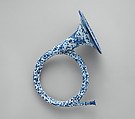
French
late 18th or early 19th century
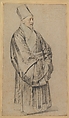
Peter Paul Rubens
1617
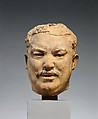
Auguste Rodin
1891
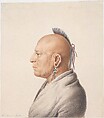
Charles Balthazar Julien Févret de Saint-Mémin
1805–7
Related Content

 Free to download
Research Resources
The Met provides unparalleled resources for research and welcomes an international community of students and scholars. The Met's Open Access API is where creators and researchers can connect to the The Met collection. Open Access data and public domain images are available for unrestricted commercial and noncommercial use without permission or fee.
To request images under copyright and other restrictions, please use this Image Request form.
Feedback
We continue to research and examine historical and cultural context for objects in The Met collection. If you have comments or questions about this object record, please contact us using the form below. The Museum looks forward to receiving your comments.