De Re Militari (On the Military Arts)
Author Roberto Valturio Italian
Matteo de' Pasti Italian
Publisher Johannes ex Verona Italian
Not on view
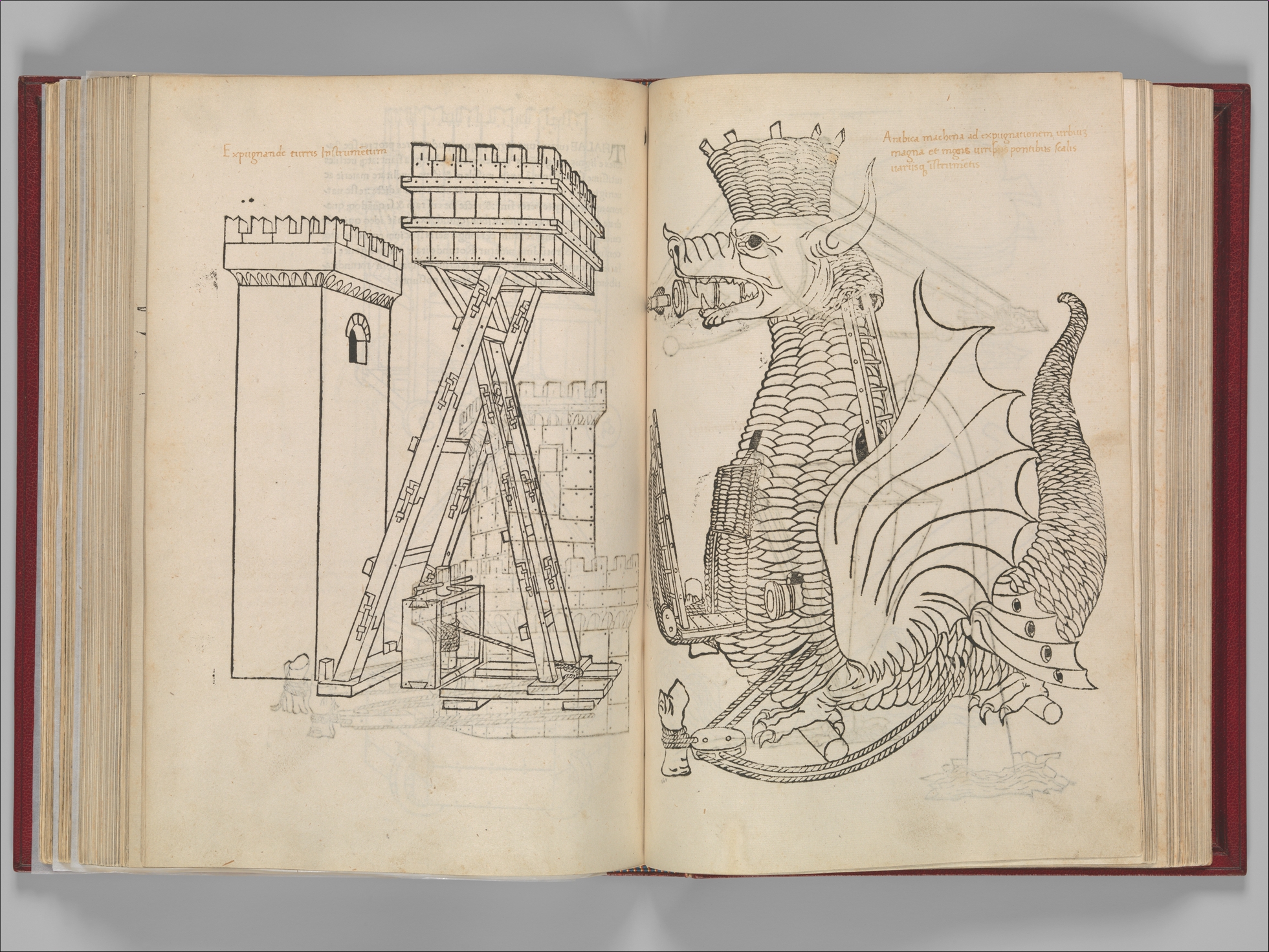
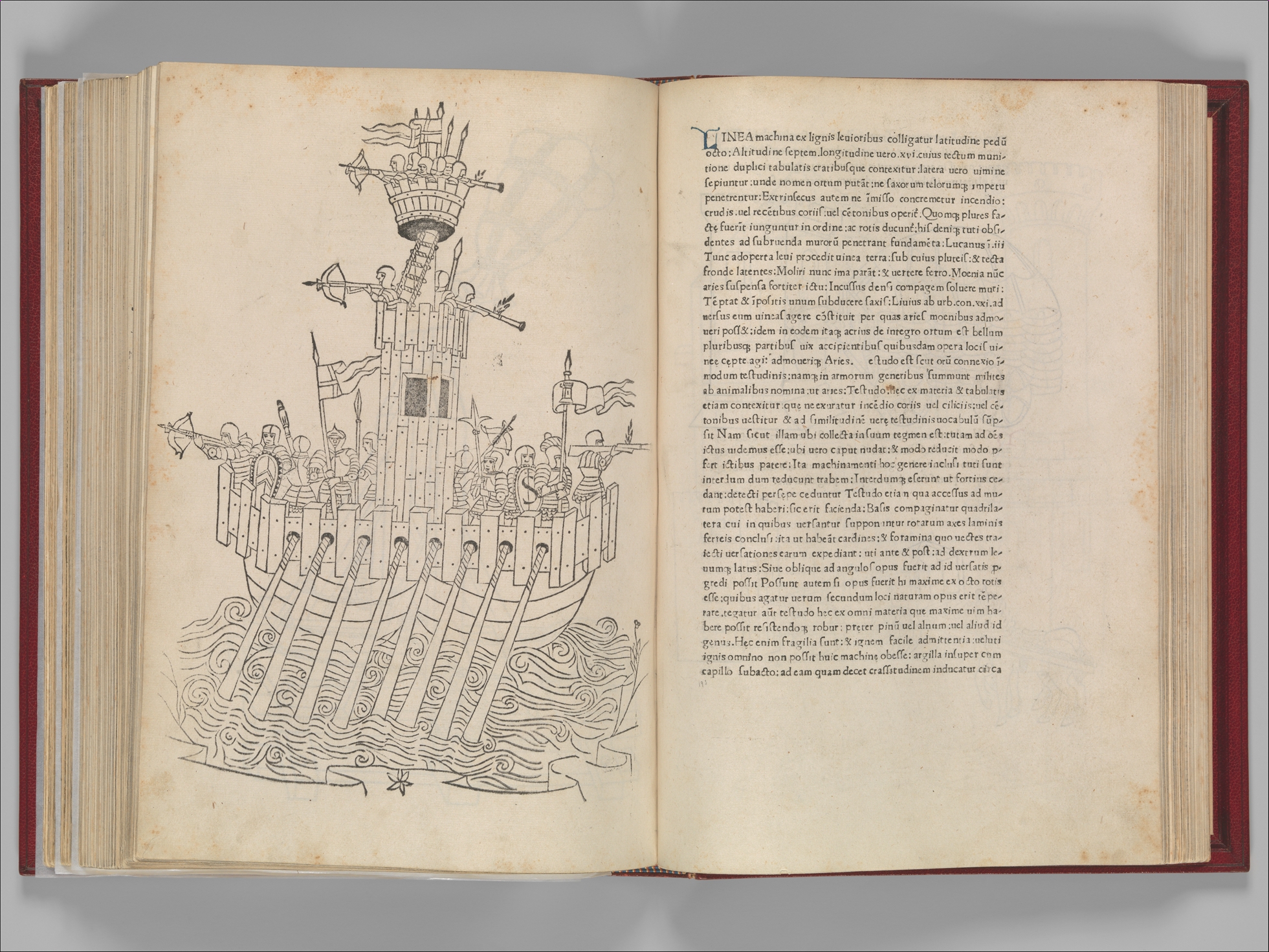
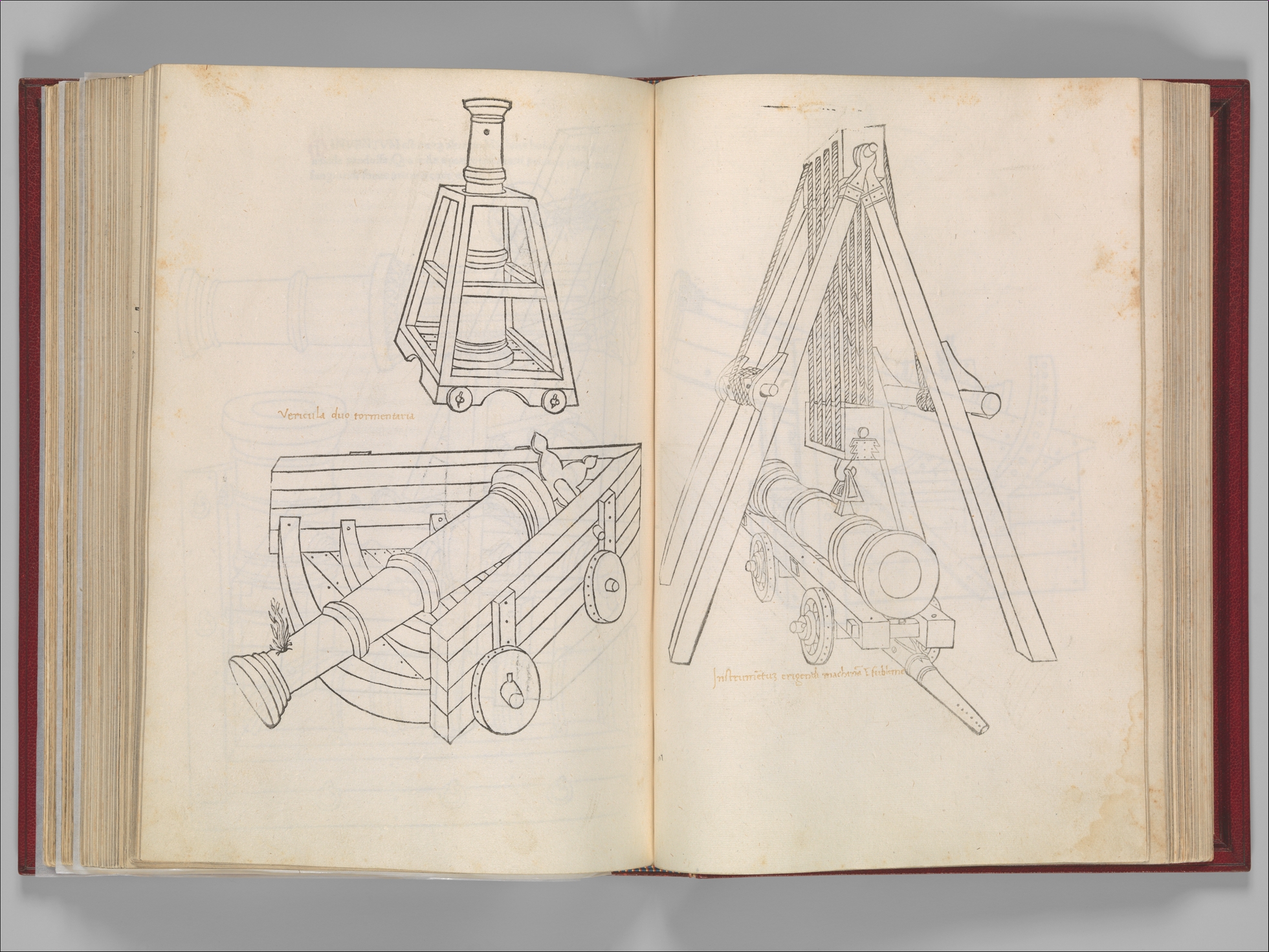
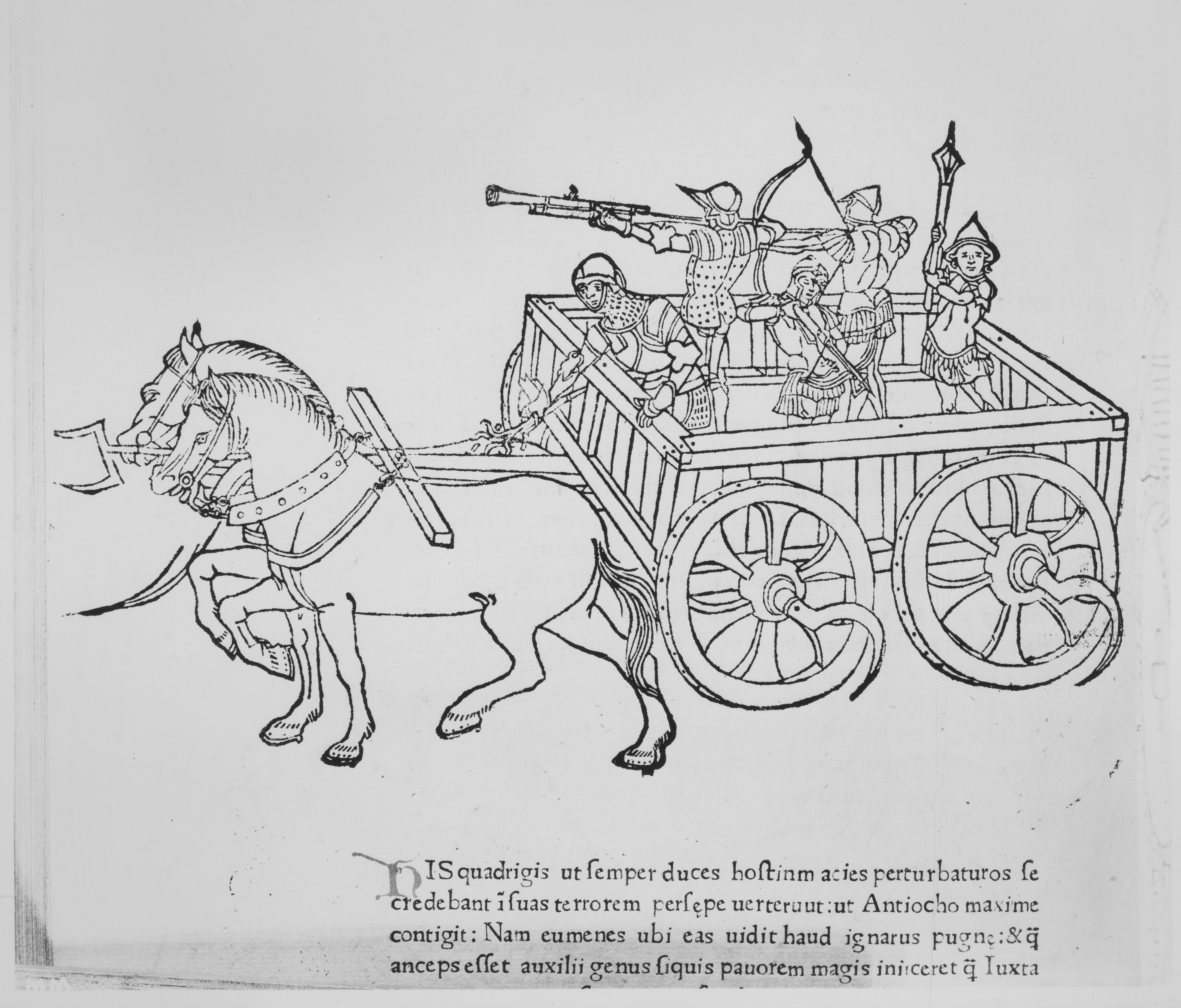
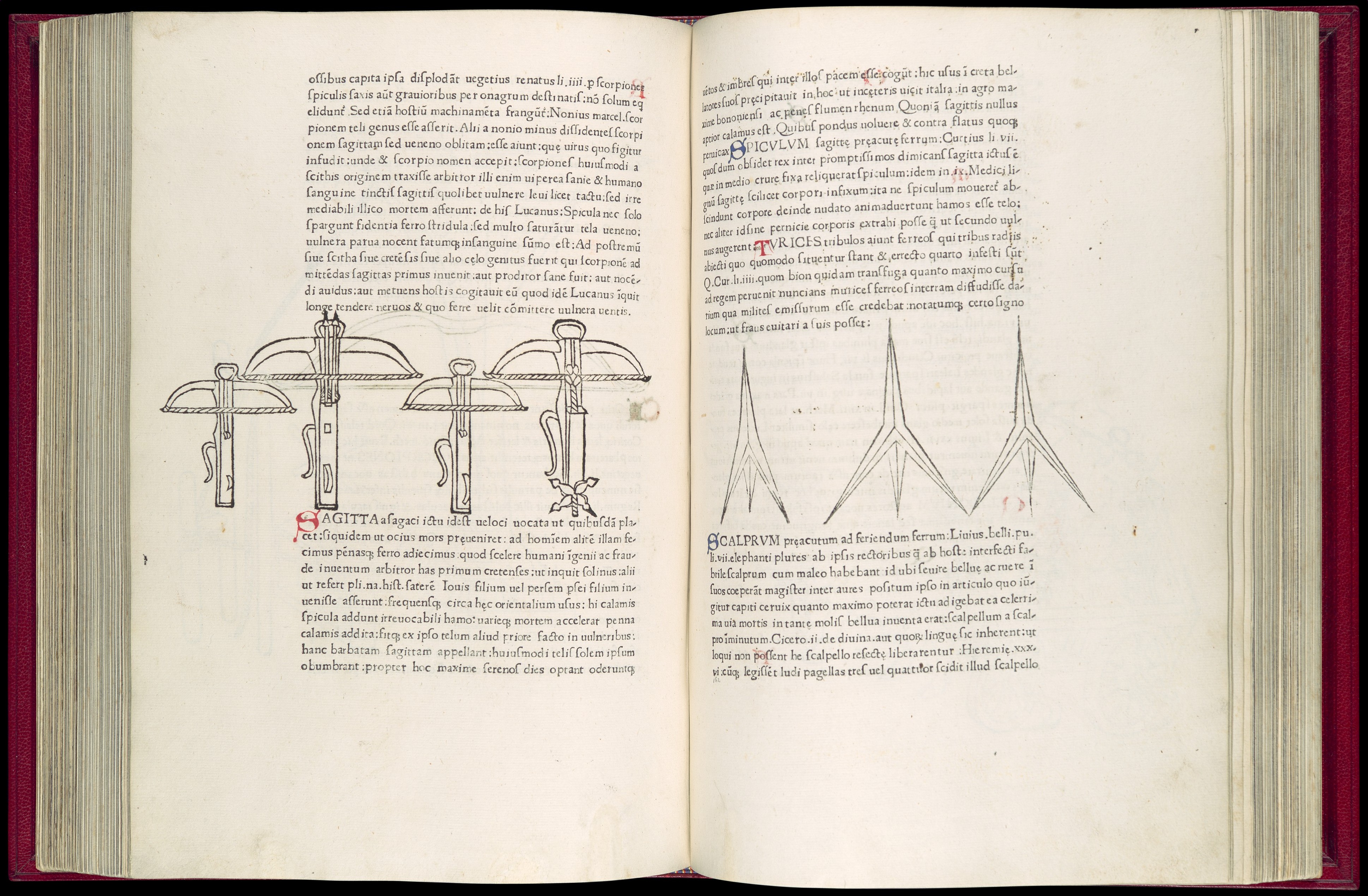
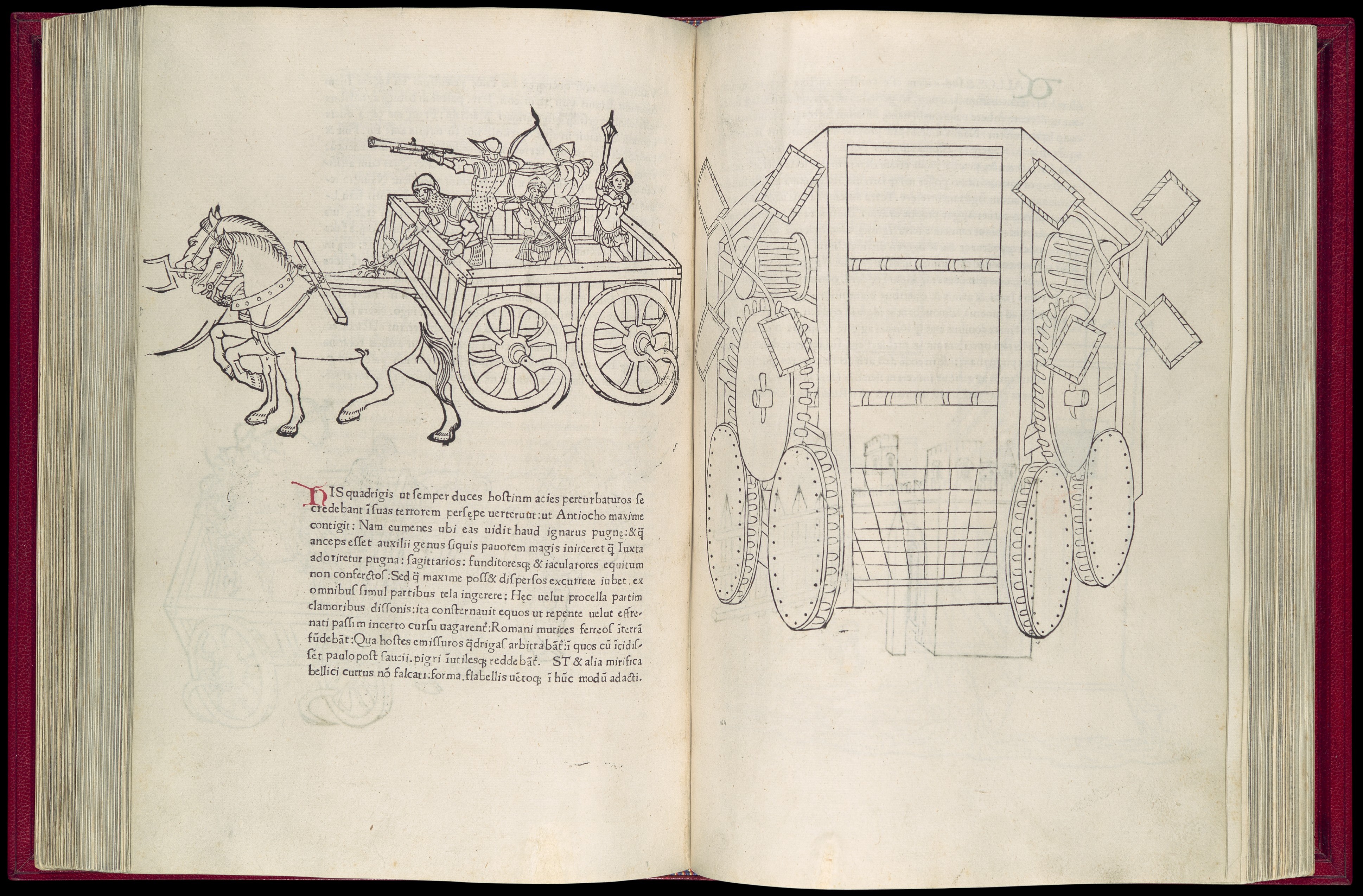
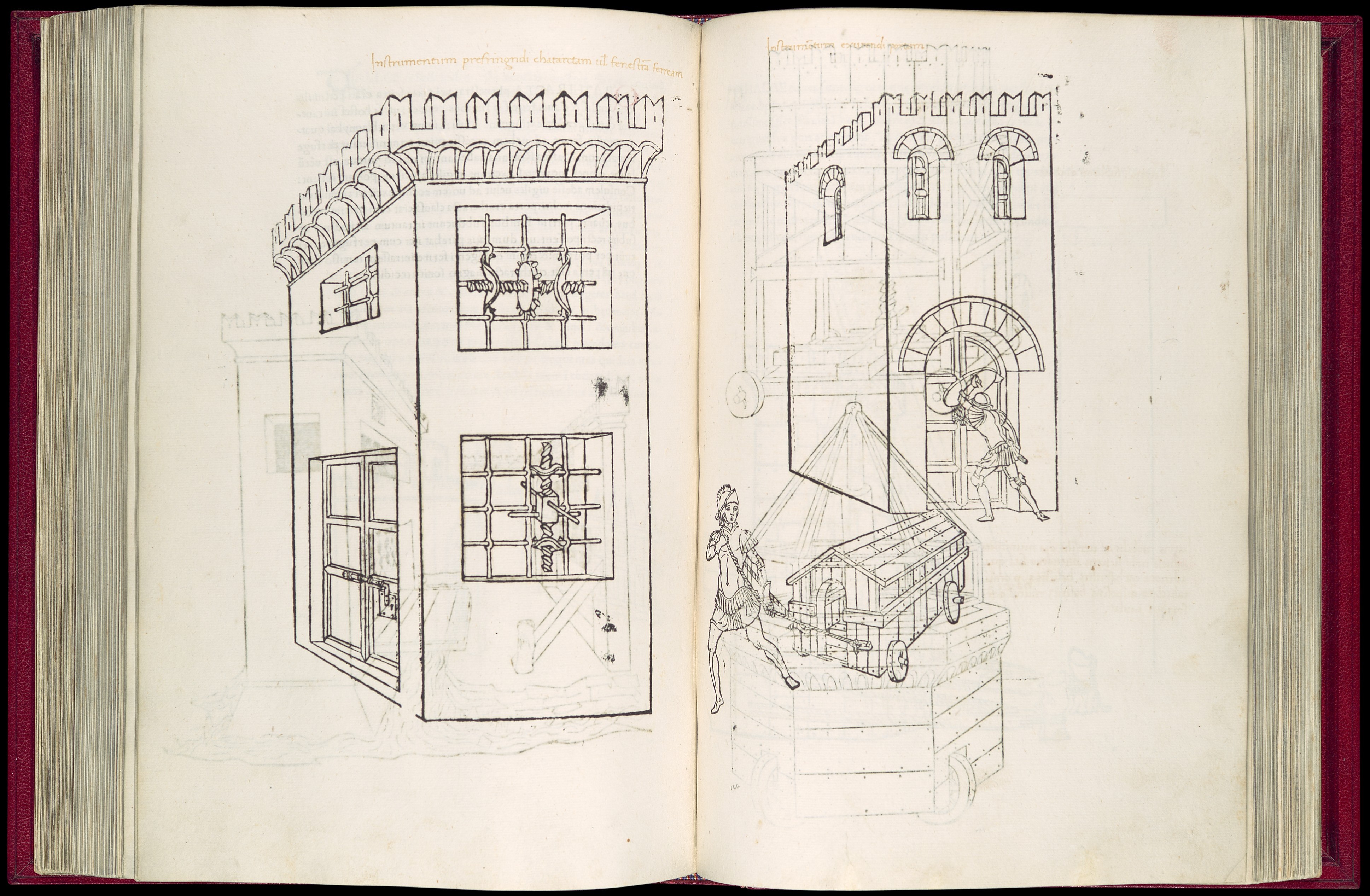
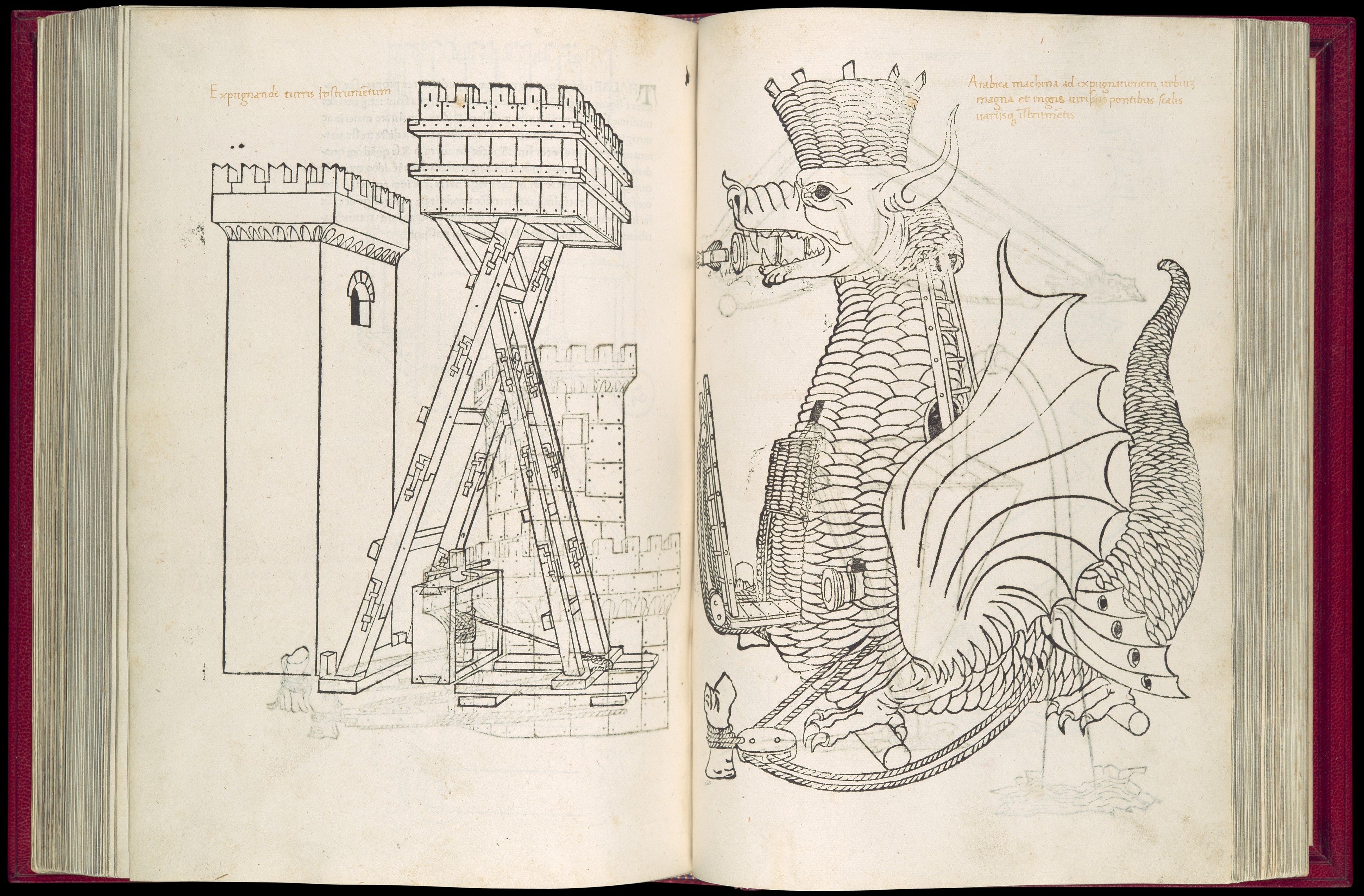
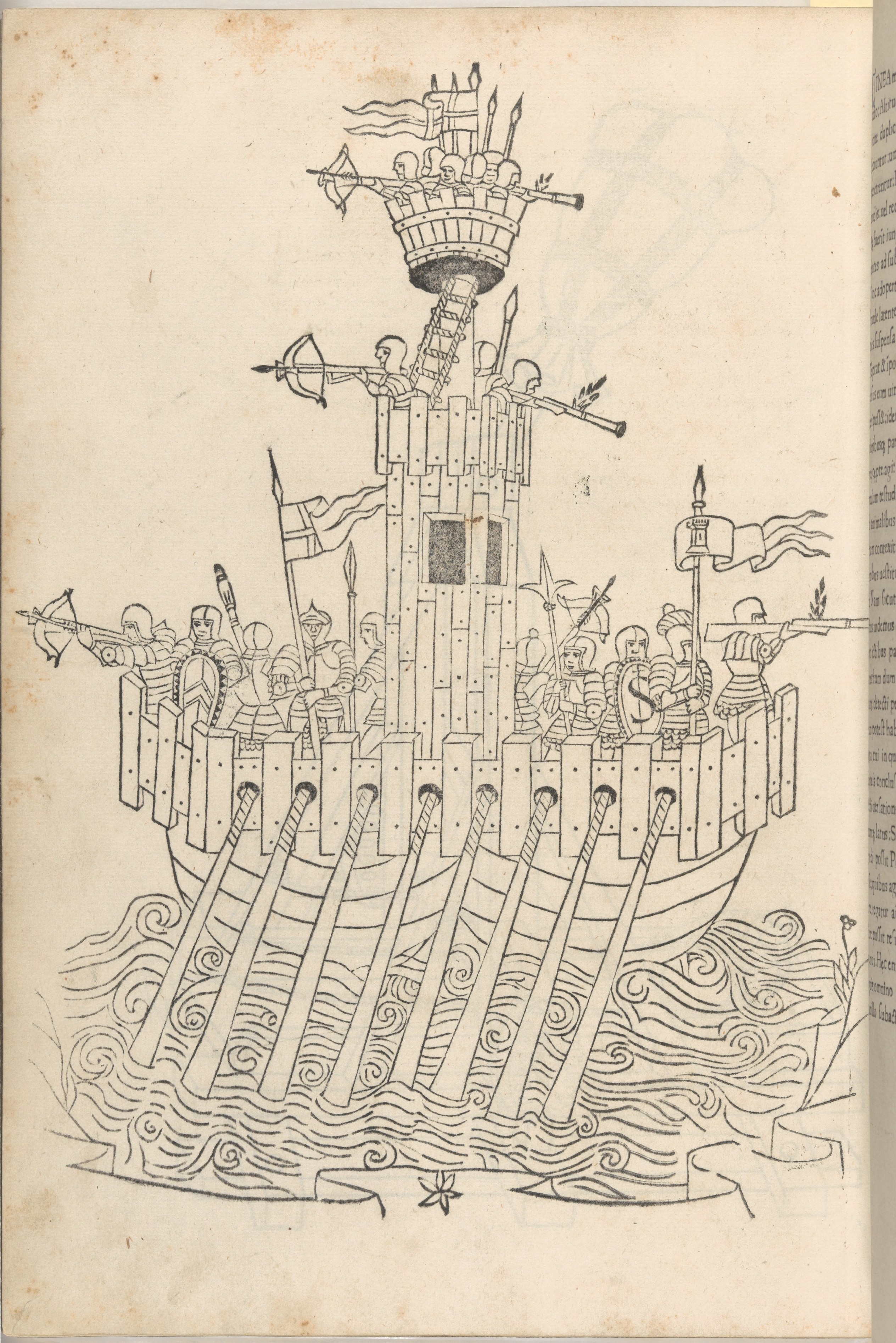
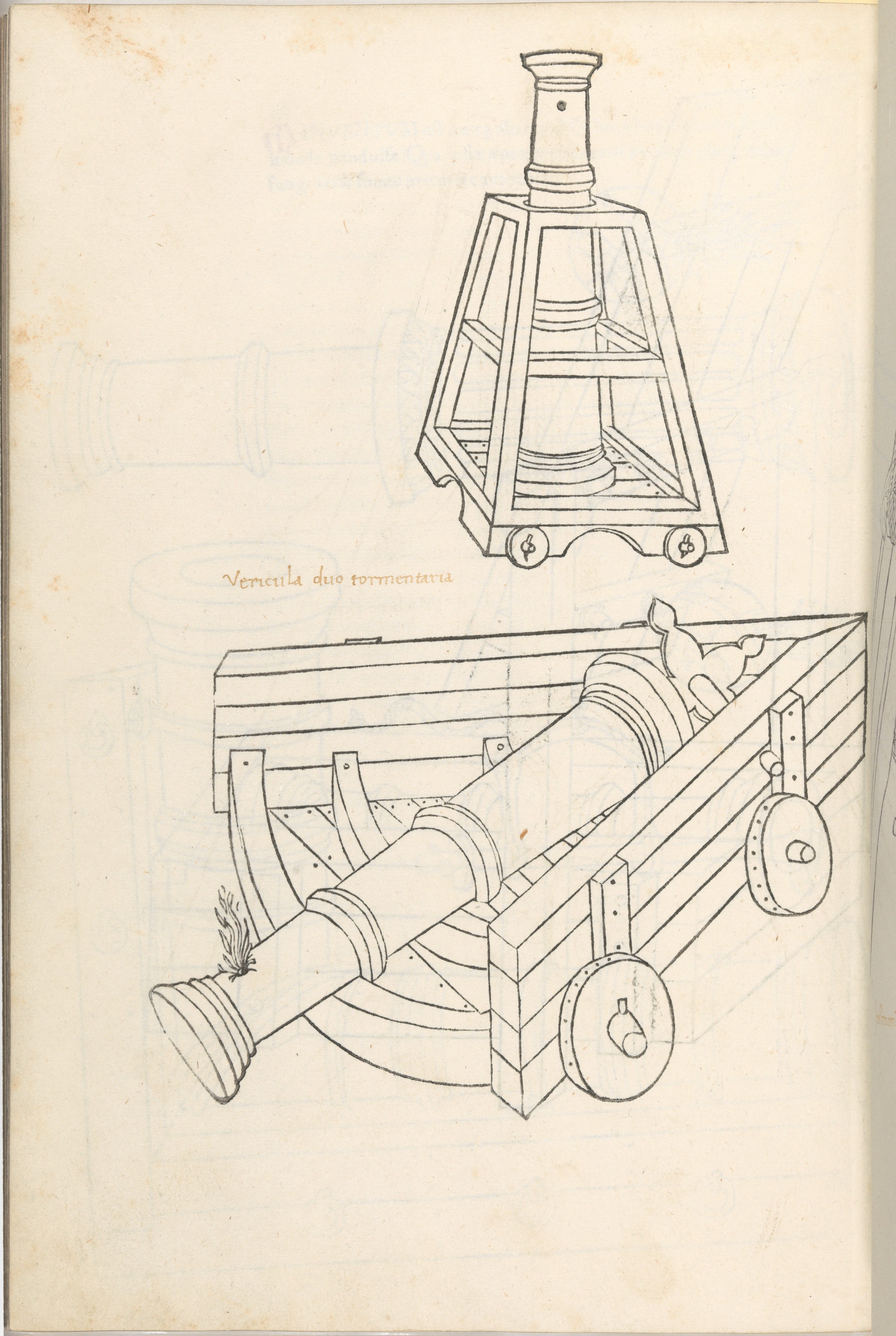
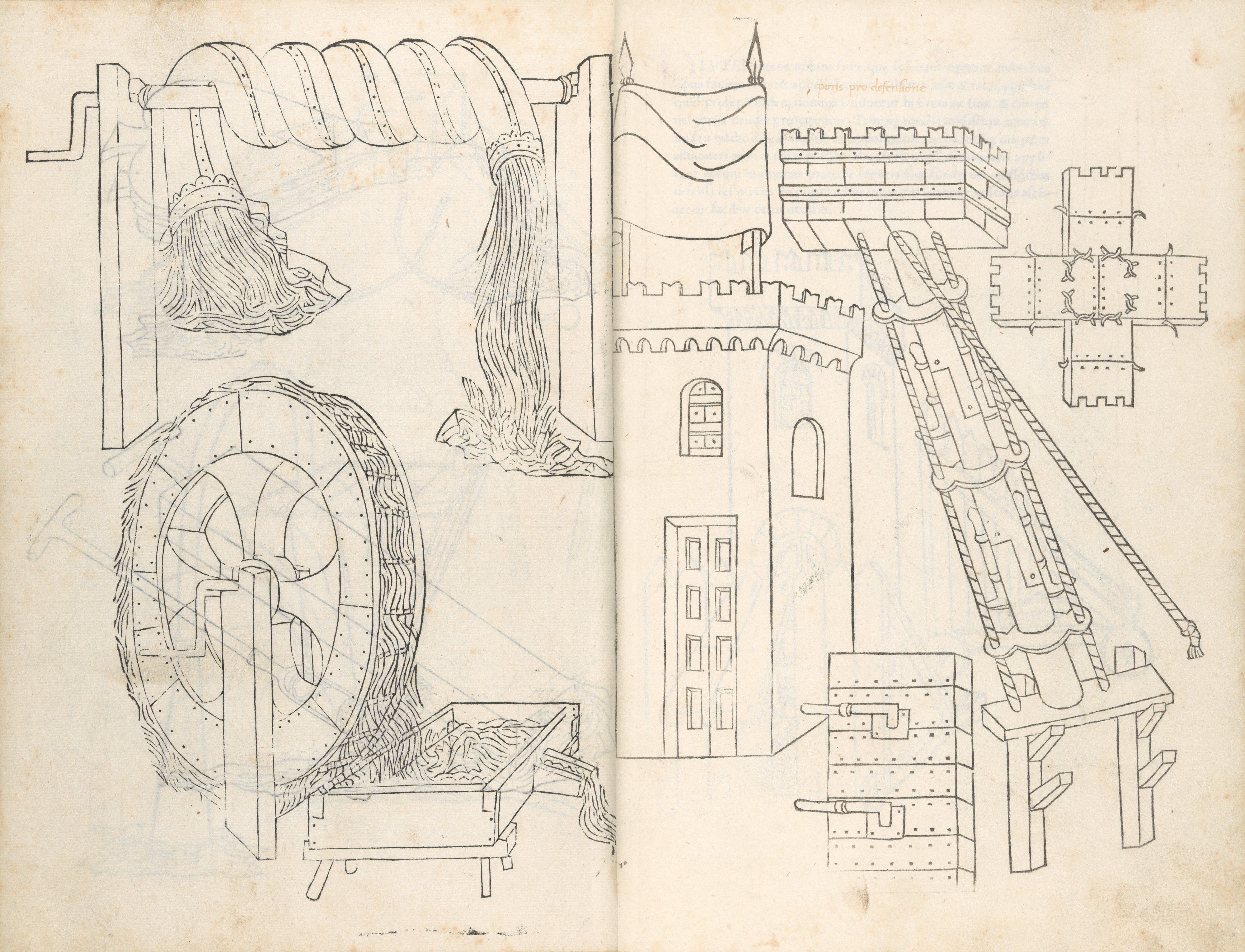
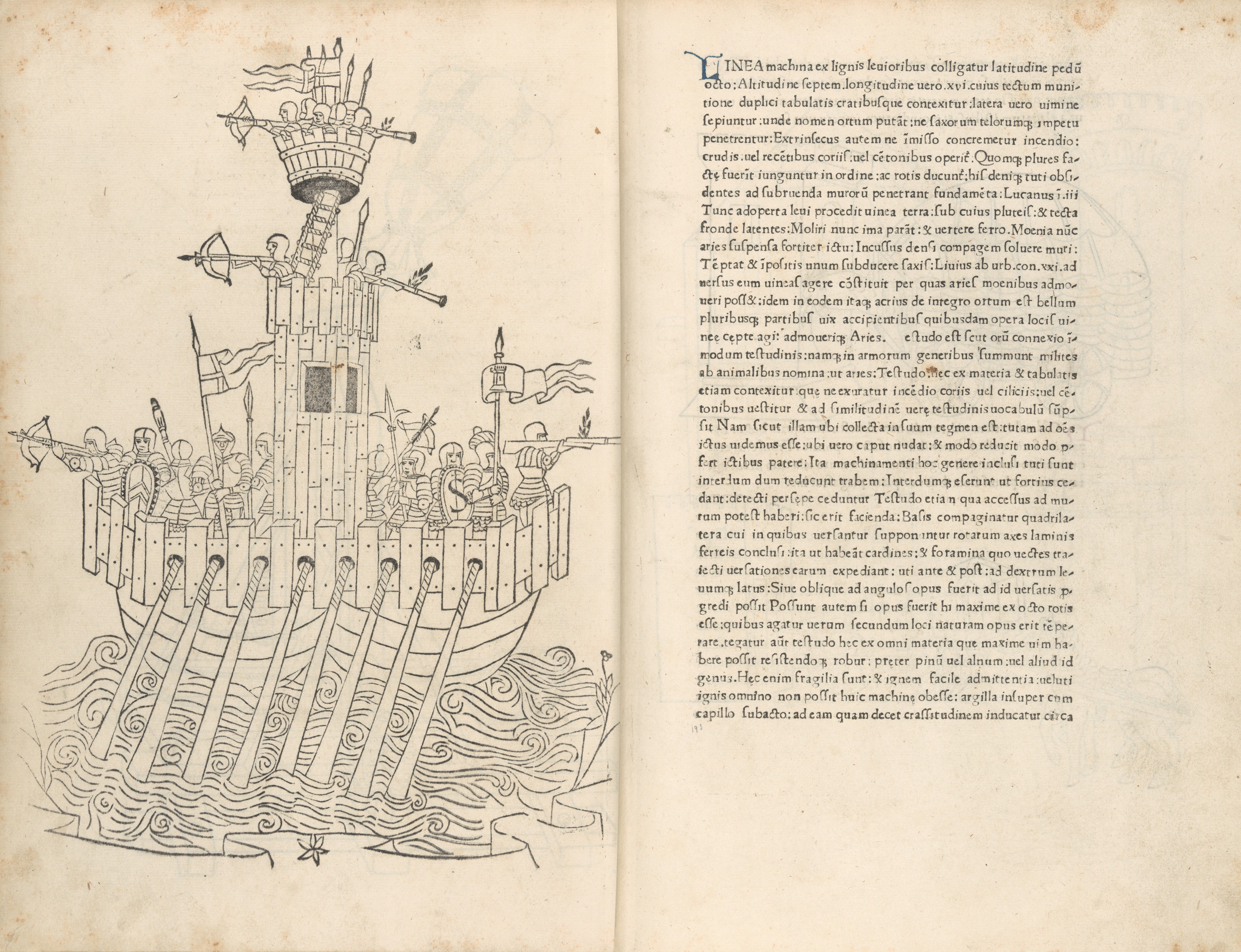
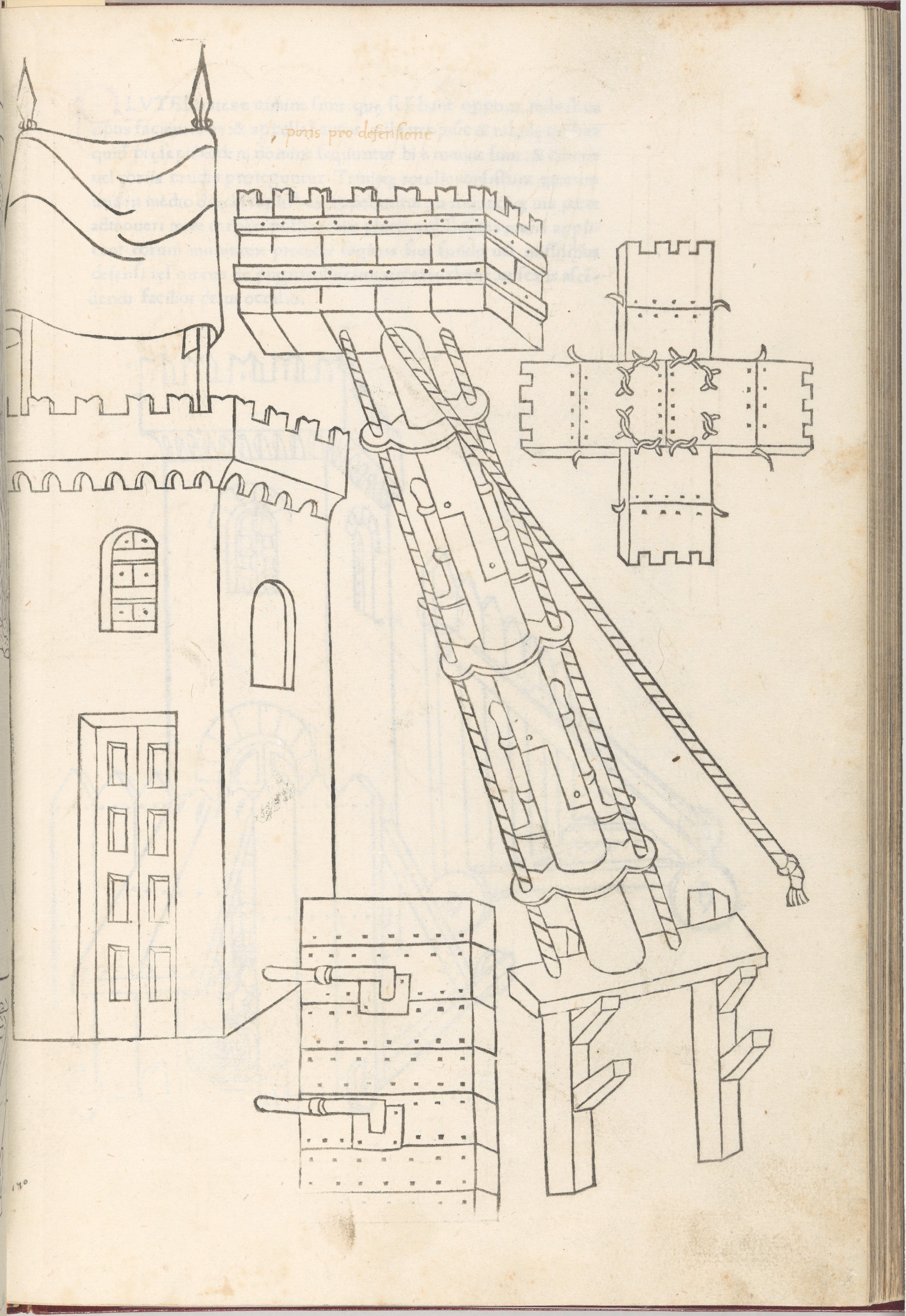
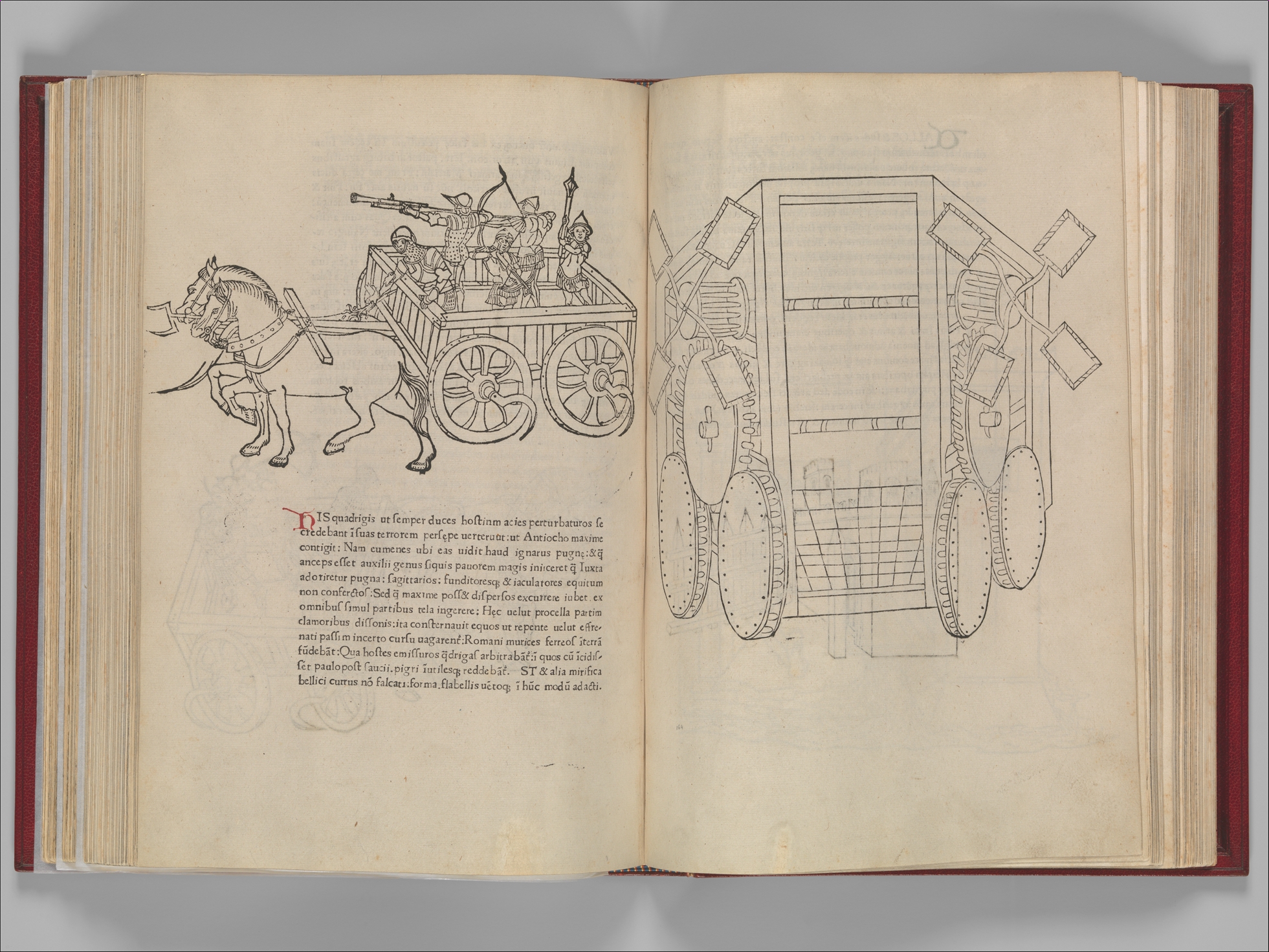
When this military treatise was completed around 1460, the patron, Sigismondo Pandolfo Malatesta, distributed a number of manuscript copies to rulers such as Louis XI, Francesco Sforza, and Lorenzo de' Medici. Twenty-two handwritten copies survive. In 1472, the book appeared in print in this Latin edition, which was followed in 1483 by an Italian version. The novelty of the publication lay less in the machines portrayed than in the fact that the images of the machines achieved such wide distribution. Leonardo da Vinci knew the Italian edition well and drew inspiration from it for some of his drawings of military technology.
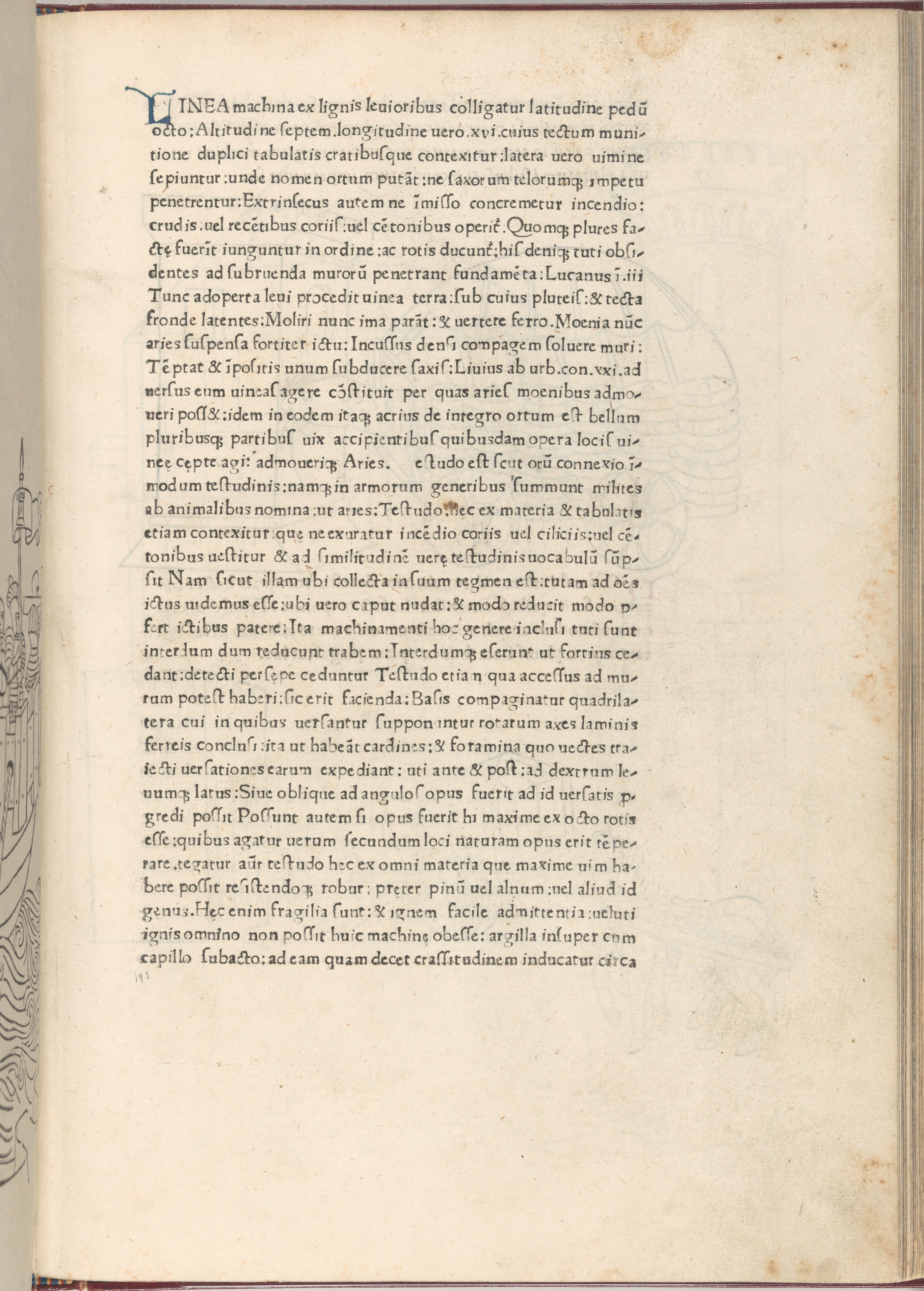
As the second illustrated book to be printed in Italy, 'De re militari' has characteristics of a transitional work. The use of signature marks to aid in assembly of the book is still lacking, there is no pagination, and the woodcuts were printed separately from the text. As in many books from the first years of printing, a role was still envisioned for the miniaturists and rubricators who had long been employed in the production of manuscripts—initial letters and headings were not printed but were meant to be added by hand. In this copy we see some of the capital letters have been painted in red and blue; larger illuminated initials mark major divisions within the book.
Due to rights restrictions, this image cannot be enlarged, viewed at full screen, or downloaded.

This artwork is meant to be viewed from right to left. Scroll left to view more.