The Gulf Stream
Artwork Details
- Title: The Gulf Stream
- Artist: Winslow Homer (American, Boston, Massachusetts 1836–1910 Prouts Neck, Maine)
- Date: 1899; reworked by 1906
- Culture: American
- Medium: Oil on canvas
- Dimensions: 28 1/8 x 49 1/8 in. (71.4 x 124.8 cm)
Framed: 42 5/16 x 62 11/16 x 5 7/8 in. (107.5 x 159.3 x 15 cm) - Credit Line: Catharine Lorillard Wolfe Collection, Wolfe Fund, 1906
- Object Number: 06.1234
- Curatorial Department: The American Wing
Audio
4037. Winslow Homer, The Gulf Stream, 1899, Reworked by 1906
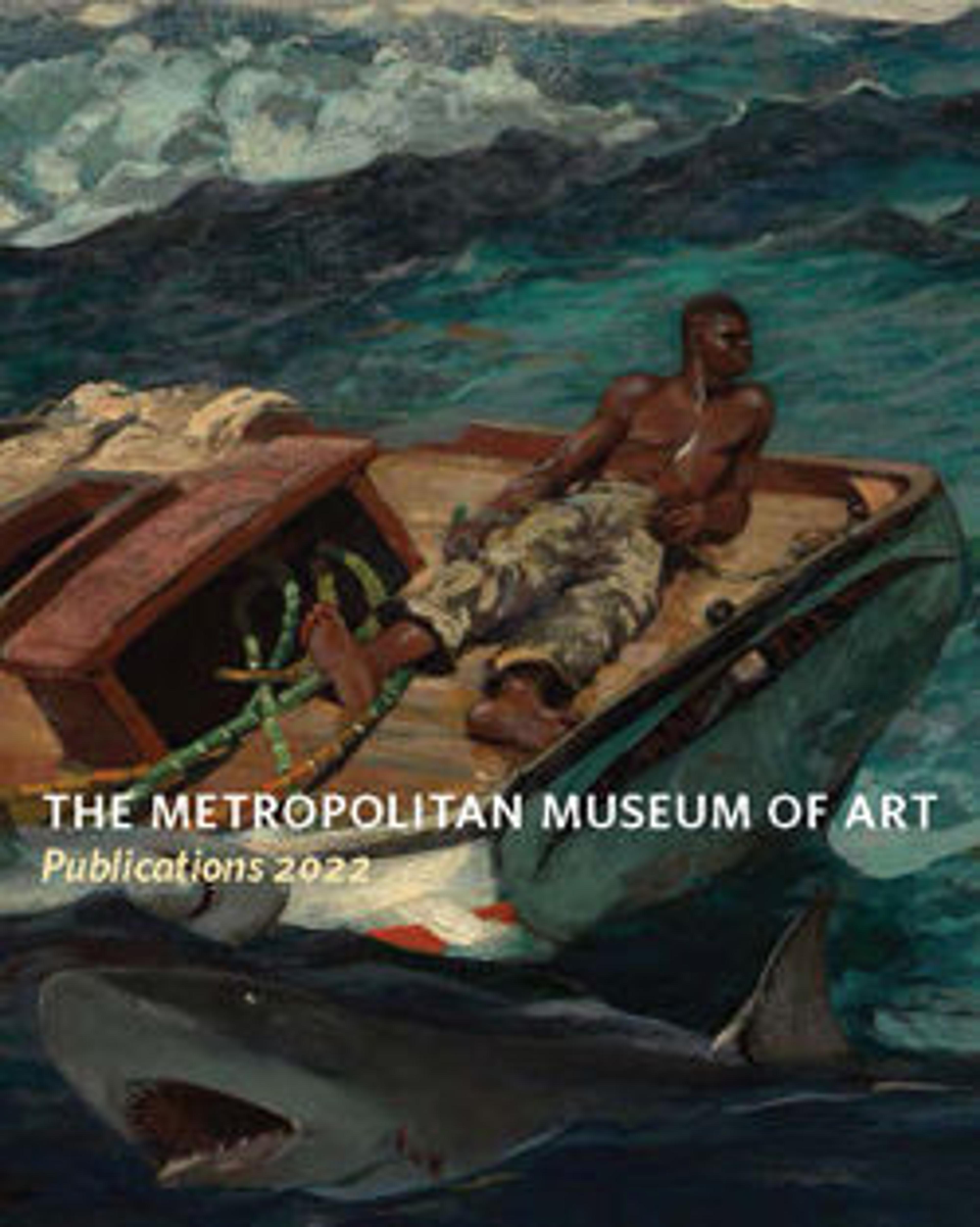
NARRATOR: The waters of the Caribbean are choppy and dangerous, setting the stage for one of Winslow Homer’s most complicated and consequential paintings, The Gulf Stream.
Professor in the Humanities at Northwestern University, Daniel Immerwahr:
DANIEL IMMERWAHR: The title refers to the Gulf Stream, which you can think of as a river within the ocean, carrying the waters of the Caribbean up the East Coast of the United States and then across the Atlantic over to Europe. That's a geography that connects the Caribbean to the United States to Europe, blending all of the spaces where Homer had painted into one single space.
NARRATOR: With the Gulf Stream as a channel uniting multiple waters, it also works as a powerful metaphor for Homer in this painting, as he brings together a variety of themes.
DANIEL IMMERWAHR: There's something that's really interesting about the subject of the painting, which is this ambiguous man who is adrift in choppy waters with a storm headed his way. Is he confident? Is he afraid? It's hard to tell.
NARRATOR: At this moment, the United States is expanding its empire and there’s political turmoil in the Caribbean. Homer alludes to those issues by creating an epic saga with a Black protagonist. Facing extreme conditions aboard his distressed vessel, he appears stoic and resolved.
DANIEL IMMERWAHR: The central figure is looking at something. But what's he looking at? We don’t know. The poet, Derek Walcott, had an idea of where this figure was looking. He was looking toward Africa. This is how he writes: “Circled by his chain-sawing sharks, the ropes in his neck turned his head toward Africa and the Gulf Stream, which left him there forever between our island and the coast of Guinea, fixed in the tribal dream, in the light that entered another Homer’s hand, its breeze lifting the canvas from the museum.”
More Artwork
Related Content

 Free to download
Research Resources
The Met provides unparalleled resources for research and welcomes an international community of students and scholars. The Met's Open Access API is where creators and researchers can connect to the The Met collection. Open Access data and public domain images are available for unrestricted commercial and noncommercial use without permission or fee.
To request images under copyright and other restrictions, please use this Image Request form.
Feedback
We continue to research and examine historical and cultural context for objects in The Met collection. If you have comments or questions about this object record, please contact us using the form below. The Museum looks forward to receiving your comments.
Content Notice
The Metropolitan Museum of Art presents over 5,000 years of art from around the world, and our online collection reflects ongoing work conducted over the course of our more than 150-year history. You may encounter objects or images that may be inappropriate for some viewers or information that may be outdated.