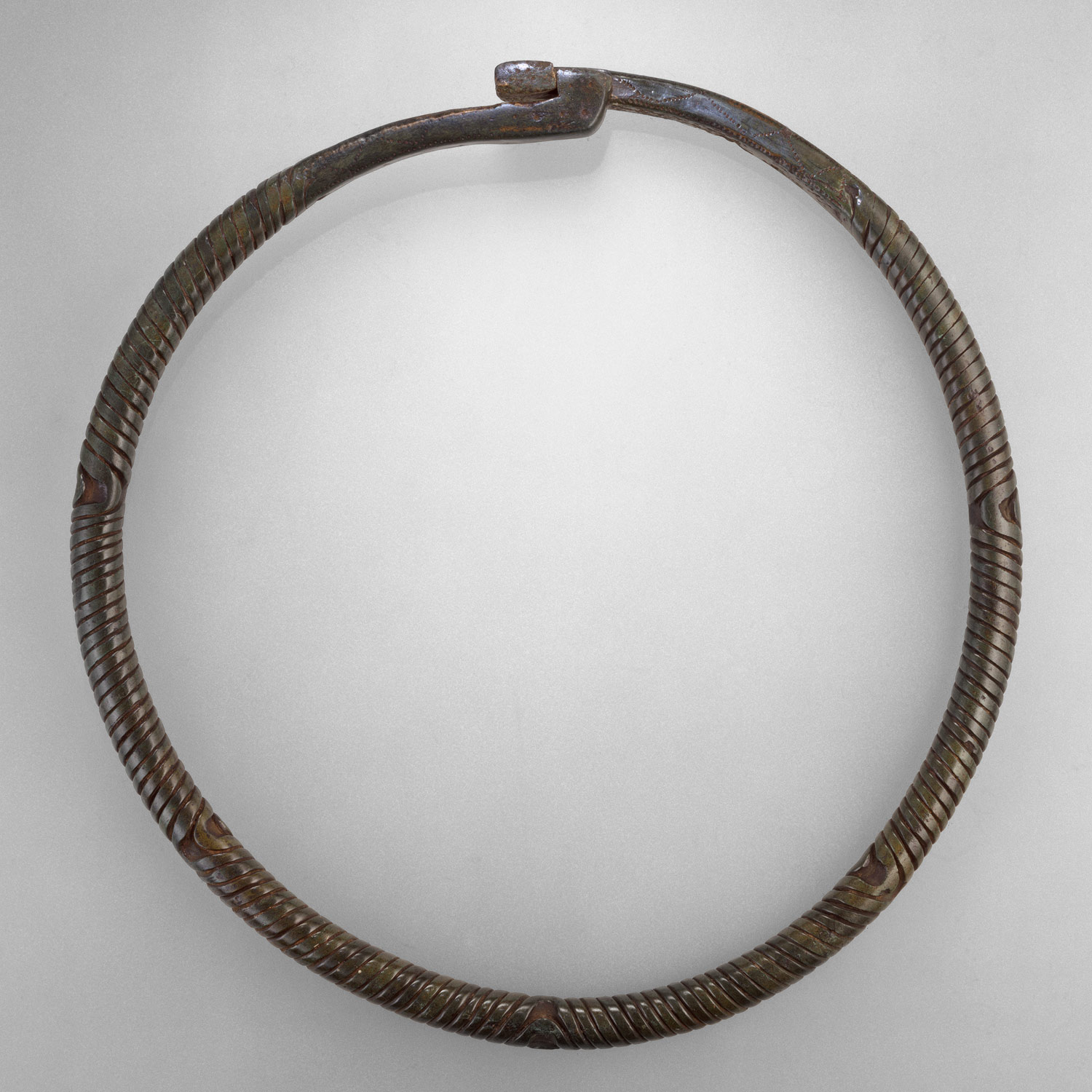
What we know of the region’s peoples between 1000 B.C. and 1 A.D. is based on two bodies of evidence. One consists of objects buried in the ground as sacrifices and sometimes in the tombs of chieftains. The other is contained in contemporary literature by Greek and Roman authors, for whom Scandinavia and eastern Europe represented two limits of the known world.
Eastern Europe and Scandinavia, 1000 B.C.–1 A.D.
-
 1987.395
Timeline
1000 B.C.
750 B.C.
NORTHERN
Bronze Age, ca. 1500–400 B.C.
EASTERN
Bronze Age, ca. 1600–700 B.C.
Cimmerian culture (Black Sea region), ca. 1300–700 B.C.
750 B.C.
500 B.C.
NORTHERN
Bronze Age, ca. 1500–400 B.C.
EASTERN
Bronze Age, ca. 1600–700 B.C.
Cimmerian culture (Black Sea region), ca. 1300–700 B.C.
Scythians, ca. 700–200 B.C.
Face Urn period (Baltic region), ca. 600–400 B.C.
500 B.C.
250 B.C.
NORTHERN
Bronze Age, ca. 1500–400 B.C.
Celtic Iron Age, ca. 400 B.C.–1 A.D.
EASTERN
Scythians, ca. 700–200 B.C.
Face Urn period (Baltic region), ca. 600–400 B.C.
Sarmatian culture (Baltic Sea region), ca. 300 B.C.–250 A.D.
250 B.C.
1 A.D.
NORTHERN
Celtic Iron Age, ca. 400 B.C.–1 A.D.
EASTERN
Scythians, ca. 700–200 B.C.
Sarmatian culture (Baltic Sea region), ca. 300 B.C.–250 A.D.
Overview
Key Events
-
ca. 750 B.C.
The Greek poet Homer mentions the Cimmerians as a people on the edge of the known world, near the entrance to the Underworld. Skilled horsemen and archers, they engage in conflicts with Assyrian and Urartian armies and bury their chieftains in kurgans, often with horses and weapons.
-
ca. 700 B.C.
Scandinavian artisans create masterly bronze objects. A graceful curve of tubing characterizes the lur, a trumpetlike musical instrument that may serve ritual or military purposes. A similar shape occurs in a pair of horned helmets found in Viksø, Denmark.
-
ca. 600 B.C.
The “Animal Style” in Scythian art develops. The art of the Scythians, who migrate from lands in the Altai Mountains to the Black Sea region, features the fauna of their homeland: the leopard, deer, and eagle. Animals leaping, running, and blending into each other indicate an interest in motion, continuity, and transformation. Some of the best-known works are gold hammered over a carved matrix.
-
ca. 600 B.C.
Greeks from the city of Miletos on the Ionian coast of modern Turkey colonize the northern Black Sea coast and establish long-lived, cosmopolitan cities such as Panticapaeum, Olbia, and Pontic Chersonesus.
-
ca. 600–400 B.C.
The peoples of the Baltic create a special type of urn for cremation burial. Nicknamed “face urns,” these pear-shaped vessels have modeled human faces and incised decorations that seem to represent personal equipment—such as weapons or combs—or imitate the designs on richly patterned garments.
-
ca. 500 B.C.
Scandinavian metalsmiths begin to work in iron. Unlike tin and copper (the components of bronze), iron is readily available in bogs and lakes, and does not need to be mined or imported.
-
ca. 350 B.C.
The Scythians, ever present on the periphery of Greek and Near Eastern centers, absorb much from these cultures’ artistic vocabulary. A series of magnificent gold sheathings for scabbards and quivers show the influence of Greek figural styles, yet the scenes depicted are hard to explain as illustrations of Greek myth. According to recent research, the pieces may be the work of artisans using Greek conventions to illustrate Scythian sagas.
-
ca. 125–100 B.C.
Neighboring Germanic tribes, the Cimbri and the Teutones, migrate south from northern Jutland. After several clashes with the Roman army, they are decisively defeated by the army of the popular Roman general Marius. The Romans will villify the Teutones and Cimbri, viewing them as archetypal northern savages.
Citation
“Eastern Europe and Scandinavia, 1000 B.C.–1 A.D.” In Heilbrunn Timeline of Art History. New York: The Metropolitan Museum of Art, 2000–. http://www.metmuseum.org/toah/ht/?period=04®ion=eue (October 2000)