Play again
Connections Home
URL
Sign Up
New Connections appear every Wednesday. Sign up for a reminder.
Researcher of European painting Jennifer Meagher investigates the emotional intensity of physical closeness.
 1280852
 946102412808308701024902102467510247141024128088878910248901024113810241242102411111024102410241280793450102481610247771024692102412809631280917757102455510248561024937102410681024126610241024823891102479810241280852
My name is Jennifer Meagher, and I'm a researcher in the Department of European Paintings. I'm talking about "The Embrace."
Seven years ago, I started learning a style of Argentine tango called "close embrace," in which the ribcages of both partners are pressed together
and the lead is communicated through the resistance created by the two bodies. I had no idea what I was walking into, but, within an hour of my life as a dance student,
found myself in this intimate embrace with a room full of strangers. The movement is driven by physical closeness, but the
music is so often about loss and loneliness. To me, the tango embrace is expressing a longing to connect.
Even though the embrace is something that's very familiar, we have levels of closeness.
Some people may find it incredibly awkward.
Embracing in dance allows us to break down some of the taboos we have about physical closeness. This illustrates a woman in a moment of animalistic abandon, in which it's okay.
I find myself looking for the story and the emotions that are living inside the embrace.
The predella panel of Paradise. A group of people have suffered an incredible ordeal: they've died and endured the last judgment and they've made it to paradise and are
being reunited with their friends and loved ones and
are embracing joyfully. It expresses the relief and the
joy that you feel when you have been redeemed,
when you are whole again.
I wanted to see if this embrace is very affectionate. But it occurred to me that this is a power couple.
And it got me thinking about self-conscious depictions of us embracing. We have ourselves
photographed with our arms around our family, our lovers, our partners. And it's a way of saying, "We're together; this person is mine."
An embrace can be violent, antagonistic, aggressive.
The relationship in the tango dance is of an aggressor and passive follower. The leader is
constantly moving into the follower's space, and the follower's job is to resist a little bit, but ultimately to yield.
An embrace can be rapturous, overtly sexual,
an expression of maternal, familial affection.
It's a moment of physical bliss, but also
where the human and spiritual connect. It can be absolutely
sorrowful, terrifying. The Madonna is clinging to her dead son and his
lifeless arm sort of returns the embrace.
The embrace can express a desire to hang onto something that
we have lost or are in danger of losing.
It's a gesture that is so potent. For me, above all,
it expresses a longing to hold something, to be fulfilled, to connect on a
very deep and intimate level.


Bottle, Skeletal Couple with Child, 3rd–7th century, Peru, Moche, Ceramic The Michael C. Rockefeller Memorial Collection, Purchase, Nelson A. Rockefeller Gift, 1967 (1978.412.196)

Bottle, Skeletal Couple with Child, 3rd–7th century, Peru, Moche, Ceramic The Michael C. Rockefeller Memorial Collection, Purchase, Nelson A. Rockefeller Gift, 1967 (1978.412.196)
|
|
|
|
|
|
|
|
|
|
|
|
|
|
|
|
|
|
|
|
Works of art in order of appearanceLast Updated: June 22, 2015. Not all works of art in the Museum's collection may be on view on a particular day. For the most accurate location information, please check this page on the day of your visit. |
||
|
Dancing a Waltz 1883–86 Eadweard Muybridge (American, born Great Britain) Glass positive Gift of the Philadelphia Commercial Museum, 1938 (38.82.22) More information: The Collection Online Not on view
|
 PhotographsSecond Floor
 |
|
[3 Couples Dancing on the Roof of the Bauhaus] ca. 1929 T. Lux Feininger (American, born Germany) Gelatin silver print Ford Motor Company Collection, Gift of Ford Motor Company and John C. Waddell, 1987 (1987.1100.412) © T. Lux Feininger More information: The Collection Online Not on view
|
PhotographsSecond Floor |
|
Two Lovers 1630; Safavid Riza cAbbasi Isfahan, Iran Tempera and gilt paint on paper Purchase, Francis M. Weld Gift, 1950 (50.164) More information: The Collection Online Not on view
|
 Islamic ArtSecond Floor
 |
|
Statue of Memi and Sabu Old Kingdom, Dynasty 4, ca. 2575–2465 b.c. Egyptian; Probably from Giza Painted limestone Rogers Fund, 1948 (48.111) More information: The Collection Online Not on view
|
 Egyptian ArtFirst Floor
 |
|
El Morocco 1955 Garry Winogrand (American) Gelatin silver print Charlotte C. and John C. Weber Collection, Gift of Charlotte C. and John C. Weber, 1992(1992.5107) © The Estate of Garry Winogrand, Courtesy Fraenkel Gallery, San Francisco More information: The Collection Online Not on view
|
PhotographsSecond Floor |
|
The Embrace 1880–1910 Auguste Rodin (French) Graphite and wash of watercolor and gouache on cream paper Purchase, Kennedy Fund, 1910 (10.66.6) More information: The Collection Online Not on view
|
 Drawings and PrintsSecond Floor
 |
|
Paradise (predella panel) ca. 1445 Giovanni di Paolo (Giovanni di Paolo di Grazia) (Italian, Sienese) Tempera and gold on canvas, transferred from wood Rogers Fund, 1906 (06.1046) More information: The Collection Online Not on view
|
 European PaintingsSecond Floor
 |
|
Plaster model for Cupid and Psyche 18th century (1794) Antonio Canova (Italian) Rome, Italy Plaster Gift of Isidor Straus, 1905 (05.46) More information: The Collection Online Not on view
|
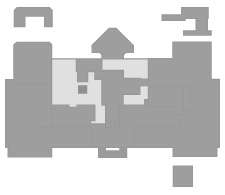 European Sculpture and Decorative ArtsFirst Floor
 |
|
Ancestral Couple (Ana Deo) 19th–early 20th century Nage people, central Flores Island, Nusa Tenggara, Indonesia Wood Gift of Fred and Rita Richman, 2006 (2006.510) More information: The Collection Online Not on view
|
 Arts of Africa, Oceania, and the AmericasFirst Floor
 |
|
Seated Couple 16th–19th century Mali; Dogon peoples Wood, metal Gift of Lester Wunderman, 1977 (1977.394.15) More information: The Collection Online Not on view
|
Arts of Africa, Oceania, and the AmericasFirst Floor |
|
[Two Young Men] ca. 1850 Unknown Artist (American) Daguerreotype Gift of Herbert Mitchell, 2001 (2001.714) More information: The Collection Online Not on view
|
PhotographsSecond Floor |
|
Hercules and Antaeus ca. 1516 Ugo da Carpi (Italian), after Raphael (Raffaello Sanzio or Santi) (Italian) Chiaroscuro woodcut from two blocks Rogers Fund, 1922 (22.67.80) More information: The Collection Online Not on view
|
Drawings and PrintsSecond Floor |
|
Acadèmies ca. 1880 Louis Igout (French) Albumen silver print from glass negative Purchase, The Horace W. Goldsmith Foundation Gift through Joyce and Robert Menschel, 1993 (1993.270) More information: The Collection Online Not on view
|
PhotographsSecond Floor |
|
Vulcan at His Forge with Mars and Venus 1543 Enea Vico (Italian), after Parmigianino (Girolamo Francesco Maria Mazzola) (Italian, Parma) Engraving; first state, partially trimmed on sides The Elisha Whittelsey Collection, The Elisha Whittelsey Fund, 1949 (49.97.351) More information: The Collection Online Not on view
|
Drawings and PrintsSecond Floor |
|
Maternal Caress 1891 Mary Cassatt (American) Drypoint and soft-ground etching, third state, printed in color Gift of Paul J. Sachs, 1916 (16.2.5) More information: The Collection Online Not on view
|
Drawings and PrintsSecond Floor |
|
Loving couple (mithuna) Eastern Ganga dynasty, 13th century Orissa, India Ferruginous stone Purchase, Florance Waterbury Bequest, 1970 (1970.44) More information: The Collection Online Not on view
|
 Asian ArtSecond Floor
 |
|
Pietà 1476 Carlo Crivelli (Italian, Venetian) Tempera on wood, gold ground John Stewart Kennedy Fund, 1913 (13.178) More information: The Collection Online Not on view
|
European PaintingsSecond Floor |
|
Venus and Adonis mid- or late 1630s Peter Paul Rubens (Flemish) Oil on canvas Gift of Harry Payne Bingham, 1937 (37.162) More information: The Collection Online Not on view
|
European PaintingsSecond Floor |
|
Bottle, Skeletal Couple with Child More information: The Collection Online Not on view
|
Arts of Africa, Oceania, and the AmericasFirst Floor |
|
Pygmalion and Galatea ca. 1890 Jean-Léon Gérôme (French) Oil on canvas Gift of Louis C. Raegner, 1927 (27.200) More information: The Collection Online Not on view
|
European PaintingsSecond Floor |
© 2011 The Metropolitan Museum of Art |
||


