Play again
Connections Home
URL
Sign Up
New Connections appear every Wednesday. Sign up for a reminder.
 1280852
 128010097201024651102484610241280853124110247601024681102464410241253102412806429341024790102411931024345102411071024813102412809938201024628102412809394601024885102474310241280852
I'm Daniel Kershaw, and my work in the Museum is designing exhibits and permanent galleries.
Doors, to me, are the key between so many different areas in the museum that normally may be oddly
disjunctive and not linked. And those abrupt transitions, I think, are part of the fun of the Met.
It's a confrontation between different kinds of art. It doesn't go down easy all the time.
I think that's part of the charm of it. One of my favorite doors that I've chopped into the building is an odd connection between
the galleries for Oceania
and the Roman galleries. In one direction
is the solid, stone architectural ornaments of ancient Rome, and through that doorway you see a featherweight
Kwoma ceiling made out of bark painted tiles, massive in its scale. Who knew? I didn't expect that connection to evolve that way and it just worked out fantastically, as odd as that juxtaposition is.
Another door that I've cut into the building which I'm really enthusiastic about is this door in the Byzantine galleries. Years ago when they moved a seven-hundred-pound display case out of the way, what I did was to open that door up and to reveal a space underneath it that was never meant to be seen before. It contains
grotty-looking brick and the rough underside of the Great Hall stairs. And it's a perfect spot to show early Christian art from northern Egypt. Most of it was burial-related, and so the fact that this crypt of a space has evolved into a gallery for crypt-based art is just perfectly wonderful.
I've always been passionate, ever since I was a little boy, with the entrance into Perneb's tomb. One of the passageways ends in
what appears to be a standard-issue Egyptian doorway, and yet it's solid stone, it's a fake doorway. I think only the gods were meant to have opened that doorway, but it's a jarring end to that passageway.
To me the most interesting doors in the Museum are those that whet your appetite. I love that monochromatic Charles Sheeler painting showing nothing, just an open door, but the door itself is so fabulously, meticulously detailed, that space beyond is beckoning you.
Some doors just impress me by their scale, and this great photograph by Gustave Le Gray, it's a grand-looking door in a religious structure meant to look even more significant by arch over arch over arch. In a way that's not too dissimilar from
this beautiful Telefolip Door Board. It's about as tall as a tall person is. Hidden in the bottom of it is a round opening symbolizing a bellybutton. And I like the idea of a doorway which is so small that you actually have to slide horizontally through it to get into the big chamber behind it.
I think that in doors there's both the forbidding and the inviting. Between those two instinctive reactions you get from a door
there's endless variations. I've always felt that the most wonderful transitions that doors provide are
those which give you an element of surprise. That what's on one side of the door is so vastly different from what's on the other side of the door.
I like the idea of completely being shocked and bewildered by what's in that transition.
The shape, the form of the doorway itself can also tell you a great deal or mislead you greatly
and those are fun games to play with, as a designer I love to play with that. And we're in an art museum, after all.
It's wonderful where the door isn't just something that leads you between places, but is something unto itself.
I think the transportation is really what the Met's all about.
I think that's what great art does, it serves as a doorway to something else.


|
|
|
|
|
|
|
|
|
|
|
|
|
|
|
|
|
Works of art in order of appearanceLast Updated: June 22, 2015. Not all works of art in the Museum's collection may be on view on a particular day. For the most accurate location information, please check this page on the day of your visit. |
||
|
The Temple of Dendur Roman period, ca. 15 b.c. Egyptian; Dendur, Nubia Sandstone Given to the United States by Egypt in 1965, awarded to The Metropolitan Museum of Art in 1967, and installed in The Sackler Wing in 1978 (68.154) More information: The Collection Online Not on view
|
 Egyptian ArtFirst Floor
 |
|
Kinryusan Temple at Asakusa: From the series One Hundred Famous Views of Edo Edo period, 1856 Ando Hiroshige (Japanese) Oban format, woodblock print; ink and color on paper The Howard Mansfield Collection, Purchase, Rogers Fund, 1936 (JP2519) More information: The Collection Online Not on view
|
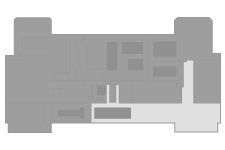 Asian ArtSecond Floor
 |
|
Elijah Boardman 1789 Ralph Earl (American) Oil on canvas Bequest of Susan W. Tyler, 1979 (1979.395) More information: The Collection Online Not on view
|
 American Paintings and SculptureFirst and Second Floors
 |
|
Interior with a Hanging Lamp 1899 Édouard Vuillard (French) Color lithograph Harris Brisbane Dick Fund, 1925 (25.70.23) More information: The Collection Online Not on view
|
 Drawings and PrintsSecond Floor
 |
|
Ceiling for a Ceremonial House 1970 and 1973 Kwoma painters, Mariwai village (active early 1970s) Sago petioles, paint Purchase, Rogers Fund and Mr. and Mrs. David Nash and Anonymous Gifts, 1975 (1975.372.1–.139) The Michael C. Rockefeller Memorial Collection, Purchase, Mrs. Gertrud A. Mellon Gift, and Mr. and Mrs. Alan Brandt Gift in Memory of Jacob J. Brandt, 1974 (1978.412.1576–.1698) More information: The Collection Online Not on view
|
 First Floor
 |
|
Mastaba Tomb of Perneb Old Kingdom, Dynasty 5, ca. 2381–2323 b.c. Egypt, Memphite Region Limestone, paint Gift of Edward S. Harkness, 1913 (13.183.3) More information: The Collection Online Not on view
|
Egyptian ArtFirst Floor |
|
The Open Door 1932 Charles Sheeler (American) Conté crayon on paper, mounted on cardboard Edith and Milton Lowenthal Collection, Bequest of Edith Abrahamson Lowenthal, 1991 (1992.24.7) More information: The Collection Online Not on view
|
Drawings and PrintsSecond Floor |
|
[Central Portal of the Church of Saint-Jacques, Aubeterre] 1851 Gustave Le Gray (French) Salted paper print from paper negative Edward Pearce Casey Fund, 1991 (1991.1058) More information: The Collection Online Not on view
|
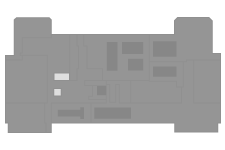 PhotographsSecond Floor
 |
|
Door Board (Amitung) ca. 1910 Abanfogop Papua New Guinea, West Sepik Province, Telefolip village, Upper Sepik River region Wood, paint The Michael C. Rockefeller Memorial Collection, Bequest of Nelson A. Rockefeller, 1979 (1979.206.1782) More information: The Collection Online Not on view
|
Arts of Africa, Oceania, and the AmericasFirst Floor |
|
Reliquary Casket 1445 Lorenzo Ghiberti (Italian) Copper gilt; champlevé enamel Rogers Fund, 1981 (1981.130) More information: The Collection Online Not on view
|
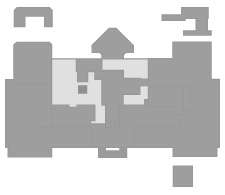 European Sculpture and Decorative ArtsFirst Floor
 |
|
Marie Antoinette's Dog Kennel ca. 1775–80 Jean-Baptiste-Claude Sené (French) Beechwood and pine; silk and velvet Gift of Mr. and Mrs. Charles Wrightsman, 1971 (1971.206.18) More information: The Collection Online Not on view
|
European Sculpture and Decorative ArtsFirst Floor |
|
Tapestry with the Annunciation ca. 1410–1430 South Netherlandish Wool warp, wool with a few metallic wefts Gift of Harriet Barnes Pratt, in memory of her husband, Harold Irving Pratt (1877–1939), 1949 (45.76) More information: The Collection Online Not on view
|
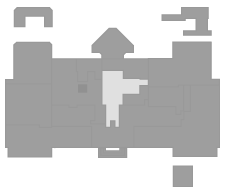 Medieval Art and The CloistersFirst Floor
|
|
Doorway carved in the 1000s, assembled in 1100s or 1200s Central Italian; Sangemini, from the abbey church of San Nicolò Marble Fletcher Fund, 1947 (47.100.45) More information: The Collection Online Not on view
|
Medieval Art and The CloistersFirst Floor
|
|
Study of Light in a Vaulted Interior Wilhelm Bendz (Danish) Oil on paper laid down on canvas Thaw Collection, Jointly Owned by The Metropolitan Museum of Art and The Morgan Library & Museum, Gift of Eugene V. Thaw, 2009 (2009.400.3) More information: The Collection Online Not on view
|
 European PaintingsSecond Floor
 |
|
Pair of doors ca. 1325–1330; Mamluk Egypt (Cairo) Wood inlaid with carved ivory panels Edward C. Moore Collection, Bequest of Edward C. Moore, 1891 (91.1.2064) More information: The Collection Online Not on view
|
 Islamic ArtSecond Floor
 |
|
A Maid Asleep ca. 1656–57 Johannes Vermeer (Dutch) Oil on canvas Bequest of Benjamin Altman, 1913 (14.40.611) More information: The Collection Online Not on view
|
European PaintingsSecond Floor |
|
Howard Carter Looking through the Open Doors of Tutankhamun's Second Shrine January 1924 Harry Burton (English) The Egyptian Expedition of The Metropolitan Museum of Art Gelatin silver print (TAA 678) Not on view
|
Egyptian ArtFirst Floor |
© 2011 The Metropolitan Museum of Art |
||


